Transport Photos from Budapest
I recently visited Budapest for a couple of days, mostly to take a gander at its public transport system.
Rather than go through my trip chronologically, like I did for my Japan trip, this time I'll go by mode of transport.
Trams
Budapest operates roughly five types of trams today:
- the Ganz CSMG, a domestically-built articulated high-floor tram from the 1960s. Some trains were refurbished and are now called the KCSV-7, but I am not quite sure how to visually distinguish the two.
 A KCSV-7 at Jászai Mari tér
 Two CSMG units at Déak Ferenc tér
- the Tatra T5C5, a high-floor tram from Czechoslovakia, built from 1978. These are the only non-articulated cars in service today. There are various modernized versions but I will not go into them here.
 The Tatras operate in two- or three-car formations depending on the line. This photo was taken at Móricz Zsigmond körtér.
- The TW 6000, articulated high-floor trams bought used from Hannover. They were originally built by Linke-Hoffmann-Busch and Duewag.

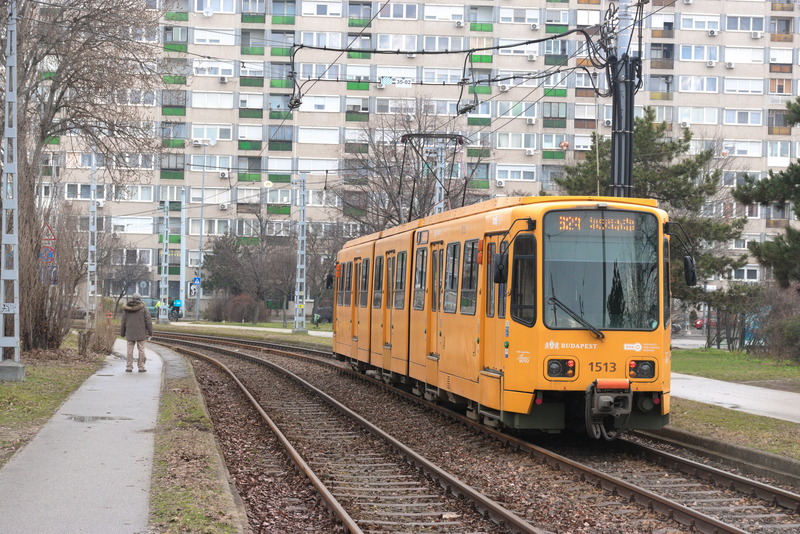
A TW 6000 at Közvágóhíd
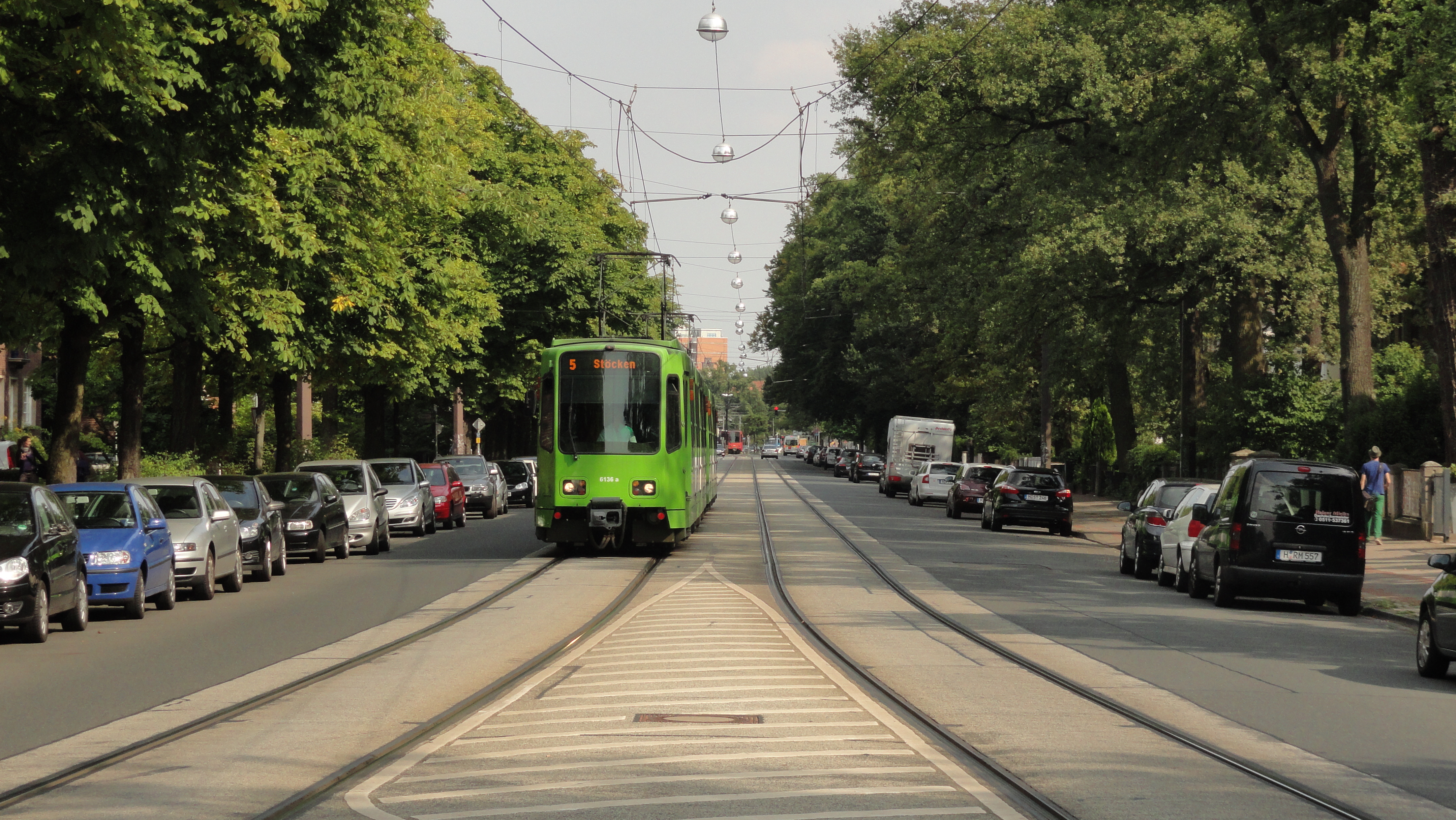
For comparison, here's a TW 6000 in Hannover.
- The Siemens Combino Supra, an articulated low-floor tram from the 2000s.
 The Combino hardly needs an introduction due to its ubiquity (even Hiroshima bought some) and its legendary technical difficulties in the 2000s.
- The CAF Urbos, an articulated low-floor tram from the 2010s that comes in two different lengths.
 The short version at Örs vezér tere
 The long version at Etele út / Fehérvári út
The Millenium Metro (M1)
Due to its age, the Millenium Metro stands out from the rest of the subway system. Built in 1896, it is one of the oldest metros in Europe1.
During these early days, the concept of a metro or subway was not as codified as it was today, and as a result, many of the early systems are very interesting. Whereas the Metropolitan Railway in London saw itself as basically a mainline railway that happened to run in underground, with the main goal of connecting several of London's termini, Budapest's M1 feels more of an underground tram, running with short, narrow and low-capacity vehicles.
 The line is currently operated with the Ganz MFAV, a derivative of the CSMG tram. However, the tunnel is very low because it had to fit between the road surface and a sewer, and regular tram vehicles simply do not fit into this tunnel. Even the earliest vehicles on this line were low-floor, which is absolutely necessary in order to have a passenger room of acceptable height. The driver, meanwhile, sits above the bogies in a very cramped high-floor section.
 Because the traction systems cannot be installed below the floor or on the roof of the vehicle, they are instead concentrated in the articulated sections above the two central bogies. Unlike on the CSMG, passengers can not move between the three cars of the train.
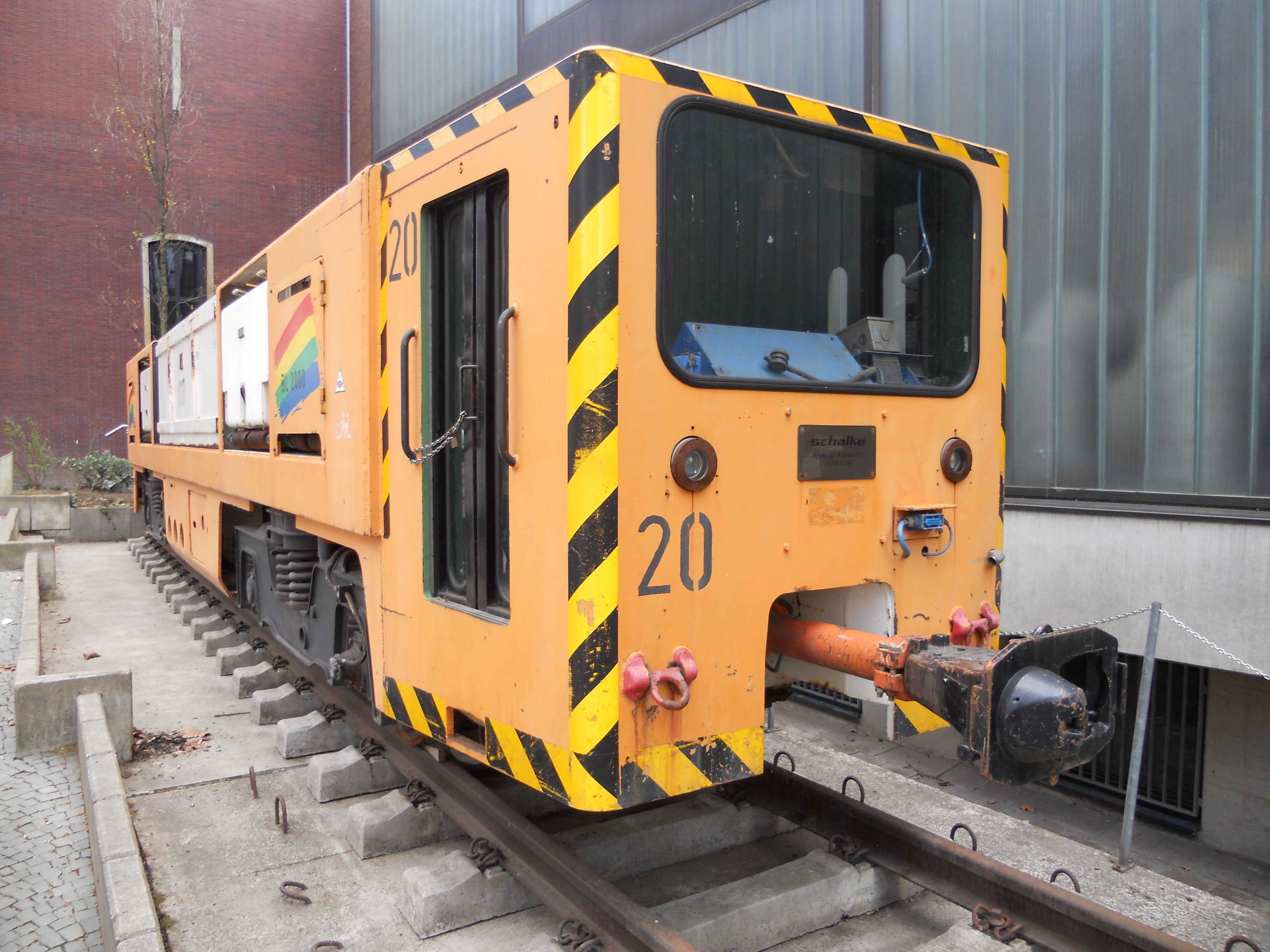 For some reason, the MFAV always reminds me of this minecar from Bochum's mining museum.
If you visit Budapest, you can find a small museum dedicated to the M1 in a bit of disused tunnel at Déak Ferenc tér.
Other metro lines
There are three other metro lines. The M2 and M3 were built during the 1970s and began operation with Soviet-built rolling stock. The M4 was opened in 2014 and runs automatically.
 The M3 still runs refurbished Metrowagonmash stock. The other two lines operate using relatively boring Alstom EMUs.
The rack railway
This is technically considered part of the tram system (as Line 60) and even has a rail connection to the tram network. Of course, as a rack railway, it has its own distinct rolling stock and as such stands out from the rest of the tram system.
 As the cars are currently approaching their end-of life, the transit agency is apparently trying out the viability of converting the line to adhesion operation.
The Children's Railway
At Széchenyi-hegy, the upper terminus of the rack railway, a short walk will take you to the Children's Railway. This is a common sight in the former Eastern bloc. Those narrow-gauge railways, often in public parks, were built to introduce children to jobs in the railway industry, and most of those jobs are performed by children under adult supervision.
When I visited, the railway was just running a diesel engine with a single car once an hour, and the staff on board outnumbered the passengers. But apparently this line becomes fairly crowded in the summer.
 Passenger car interior
 The diesel locomotive was operated by an adult.


 At each of the termini, the locomotive has to run around the train. This is Hűvösvölgy, the northern terminus. Instead of taking the train back, you can also use the tram from here to return directly to the city center.
Trolleybuses
 An Ikarus trolleybus at Keleti station. This was the only one I saw in passenger service, unfortunately.
 This one is used for staff training.
These days, the bulk of the trolleybus fleet consists of Solaris Trollinos, the trolleybus version of the Urbino.
HÉV suburban trains
MÁV-HÉV operates five suburban railway lines, numbered H5 through H9. Their rolling stock consists mostly of the MX and MXA EMUs, built in the 1970s by LEW Henningsdorf in the GDR.
 At Batthyány tér, terminus to the H5 and M2
 At Közvágóhíd, terminus to the H6

 At Szentlélek tér, on the H5
 Interior
 A single vehicle has been refurbished due to the series' high age, seen here at Batthyány tér
Funicular
There's a funicular from the bank of the Danube to Budapest Castle. Interestingly, it does not use an Abt-style switch but is double-tracked for its entire length.

Railways
Hungary no longer has a strong railway manufacturing industry, so in terms of modern vehicles, you won't see anything too surprising here. The Taurus, Vectron and TRAXX families are very common in terms of locomotives, and the Stadler FLIRT and KISS are mainstays of MÁV's suburban network.
However, many older vehicles are still in service and some of them are a lot more interesting.
 A KISS at Budapest-Keleti station. The KISS is so uninteresting to me that I didn't take a single better photo of one during my entire stay.
 A pair of FLIRTs at Budapest-Deli station
 The 416 series was built by Metrowagonmasch and, despite its retro looks, is actually from the 2000s. Photo taken at Budapest-Deli station.
 The V43 series was built by Hungarian manufacturer Ganz starting in 1963. They are still a common sight today. Seen here at Budapest-Nyugati next to a Czech Vectron on an international train.
 This one was spotted at Budapest-Deli, on a rake of what appears to be former Deutsche Reichsbahn rolling stock.
 Still at Budapest-Deli, a largely unroofed station.
 This akiem locomotive leased to MÁV is a former SNCF BB36000. The location is still Budapest-Deli, and the first car of the train also appears to be ex-DR.
 I assume that these two shunters are used to provide train heating. Their pantographs have been removed with a simple cable connecting them to the overhead wire.

A shunter at Budapest-Kelenföld station, perhaps the larger sister of the Children Railway's locomotive?
 A 448 series shunter at Budapest-Keleti. The first car of the train appears to be an ex-ÖBB "Schlierenwagen".
 Axle generators are still a common sight in Hungary. They provide electricity for train lighting and heating in the absence of head-end power. To the left, on the axle, sits a gearbox, which is connected via a cardan shaft to the actual generator mounted on the bogie.
Footnotes
-
I am being deliberately vague here because giving an exact number (like "the third-oldest") would require a definition of "metro", a term which is notoriously hard to nail down. Thousands of flamewars have been fought over it. ↩