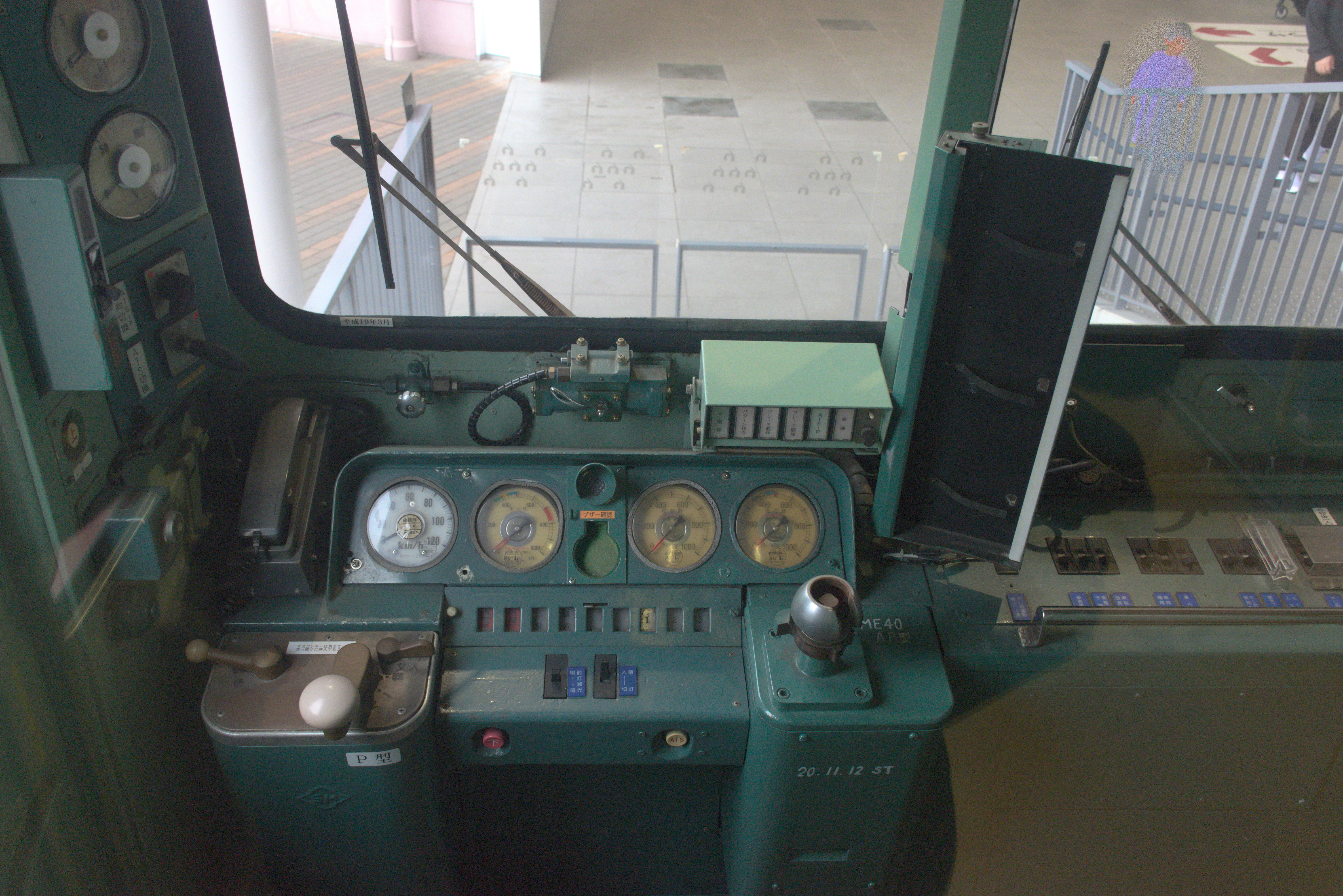
Monday December 22nd - Transfer to Osaka
With week 1 already over, I hopped onto the Hikari after an awful night of sleep. My original plan was to leave the train at Nagoya and visit the SCMaglev museum. However, this plan failed because storing my luggage near Nagoya station was simply impossible. This came as a bit of a surprise to me, because the trains hadn’t even been that full, but the coin lockers were filled to the brim.
So I just had a quick lunch near the station, then hopped onto the next Hikari onwards to Osaka and checked into my hotel. In the evening, I took a short walk around the hotel and grabbed a bite to eat somewhere - I honestly don’t even remember where or what.
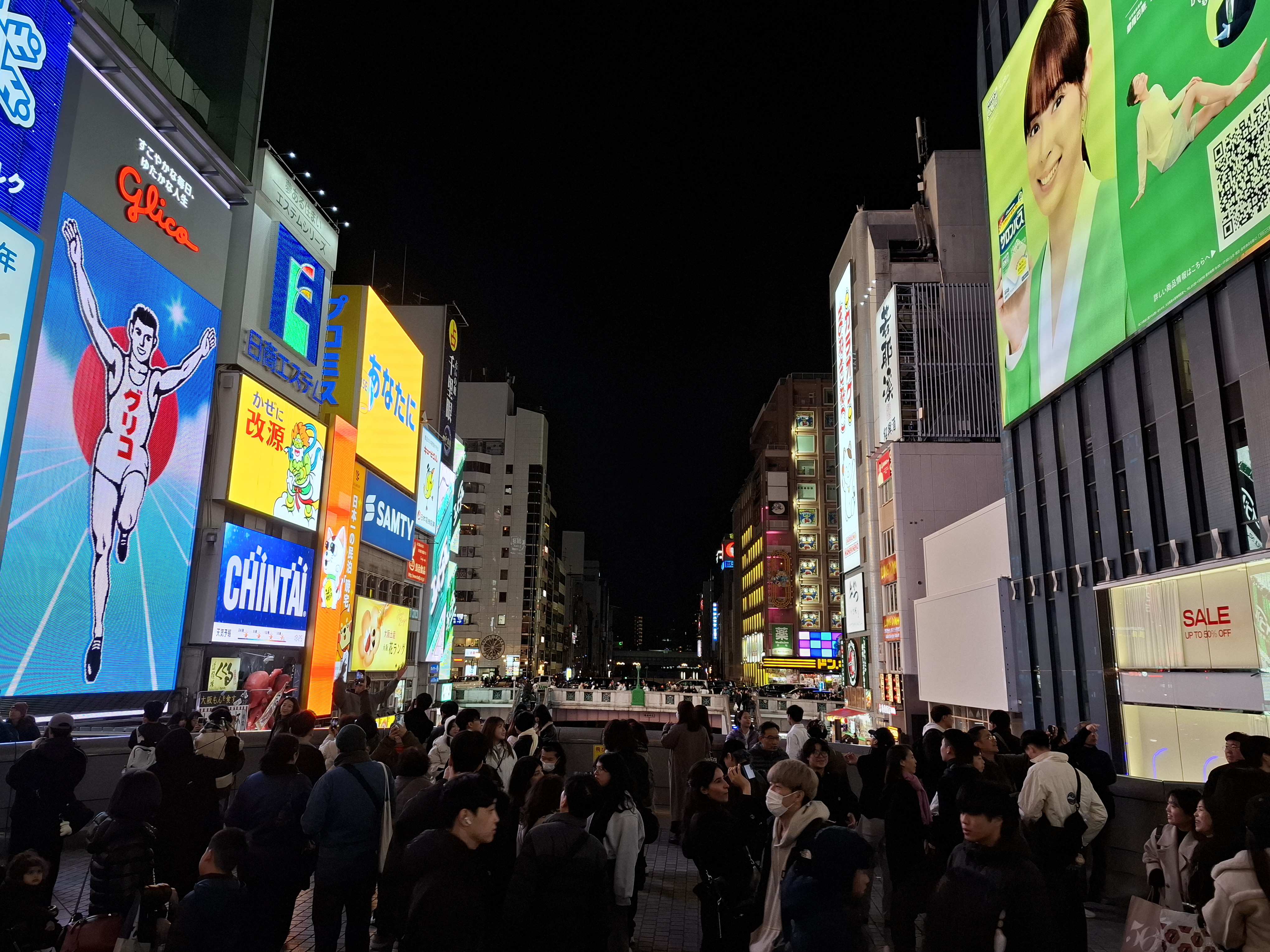
Tuesday December 23rd - Nara etc
With my health issues being back in control, and my legs rested after the fairly calm previous day, I left the hotel in high spirits but with no clear plans.
The nearest station to my hotel was Kintetsu-Nippombashi, which provides easy access to Nara, which was on my to-do list. In non-railway terms, Nara is notable for being the first “permanent” capital of Japan (although it was quickly succeeded by Kyoto in that role), and its park which is home to a large population of wild deer. In railway terms, I know the Kintetsu Nara line from BVE (see also: my guide on BVE 5), and JR Nara station sees both the 205 Series on services to Kyoto and the 103 Series on the Sakurai Line. Both of these trains are becoming increasingly rare, and the 103 Series is one I absolutely wanted to see. All of that made Nara a must-see destination.
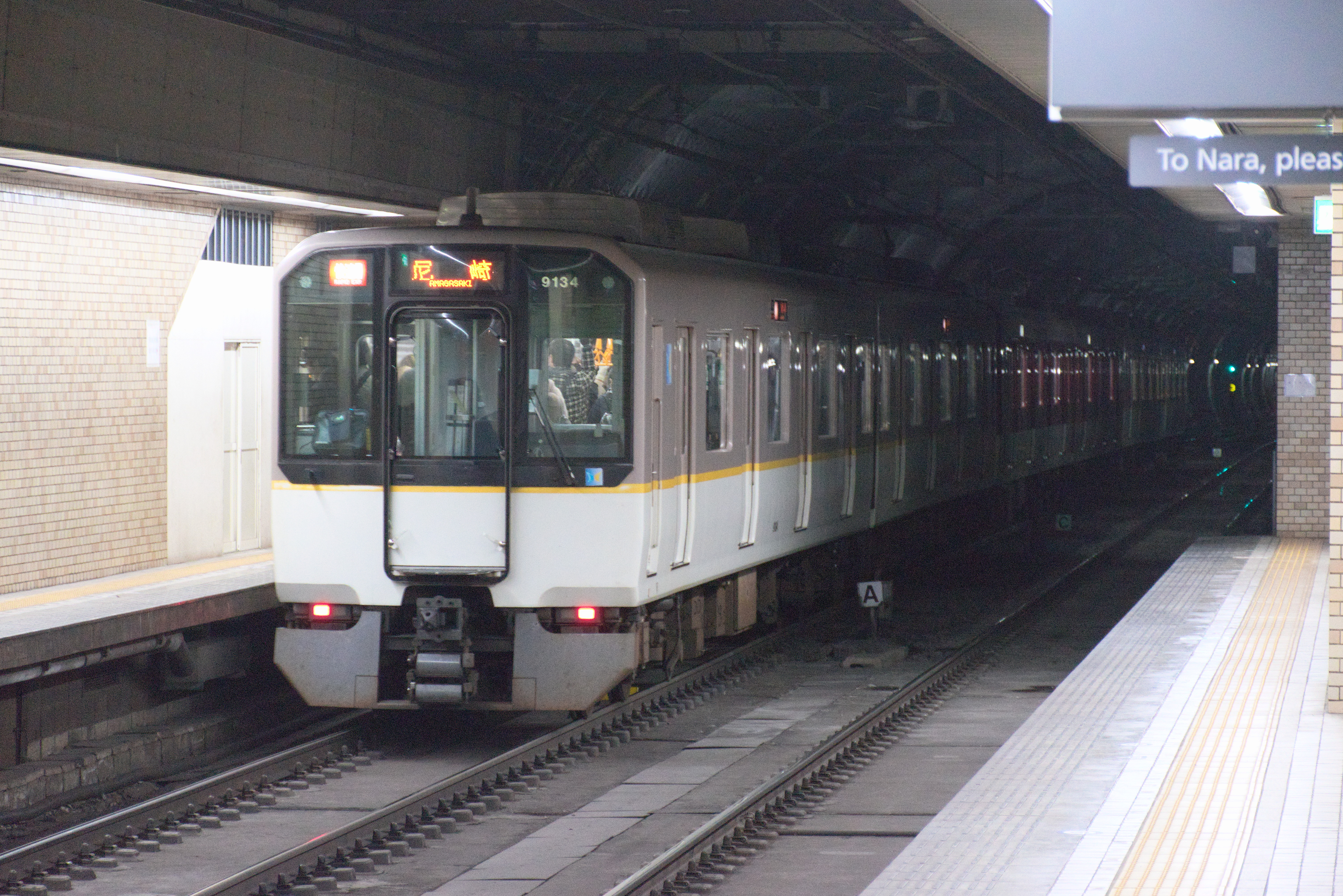
Kintetsu-Nippombashi station
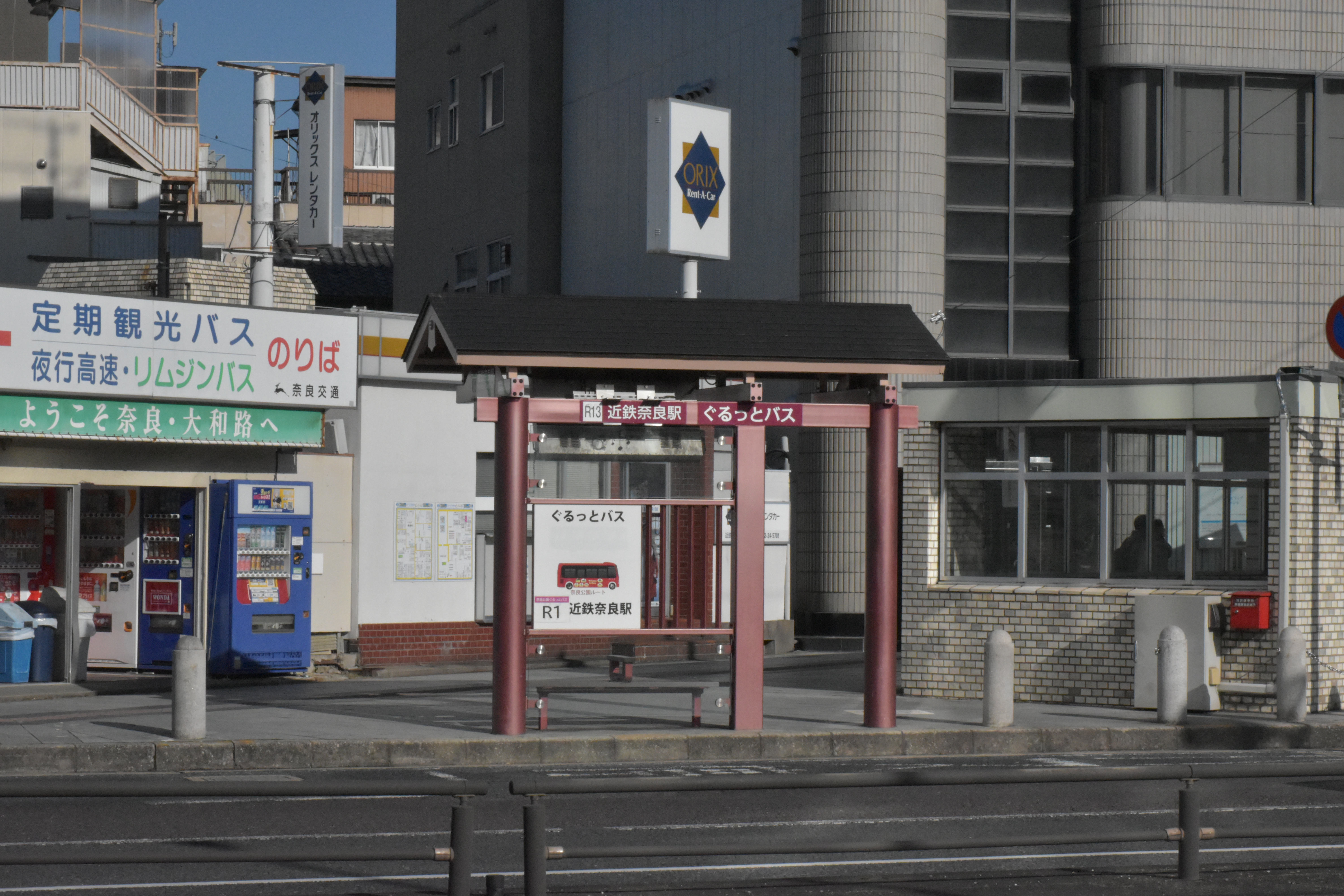
A bus stop in Nara

The deer are not shy at all.
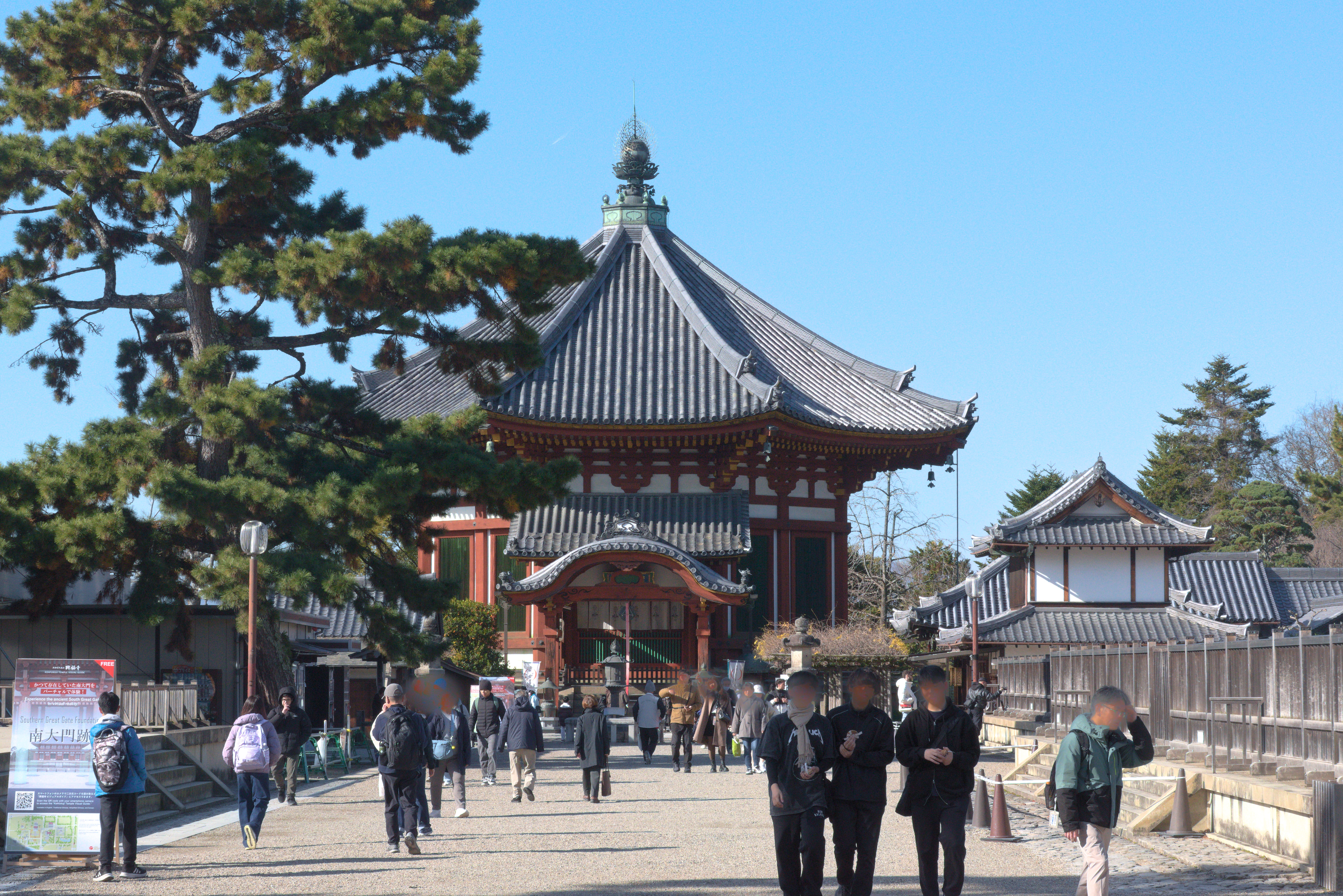
Nanen-do, a Buddhist temple within Nara Park
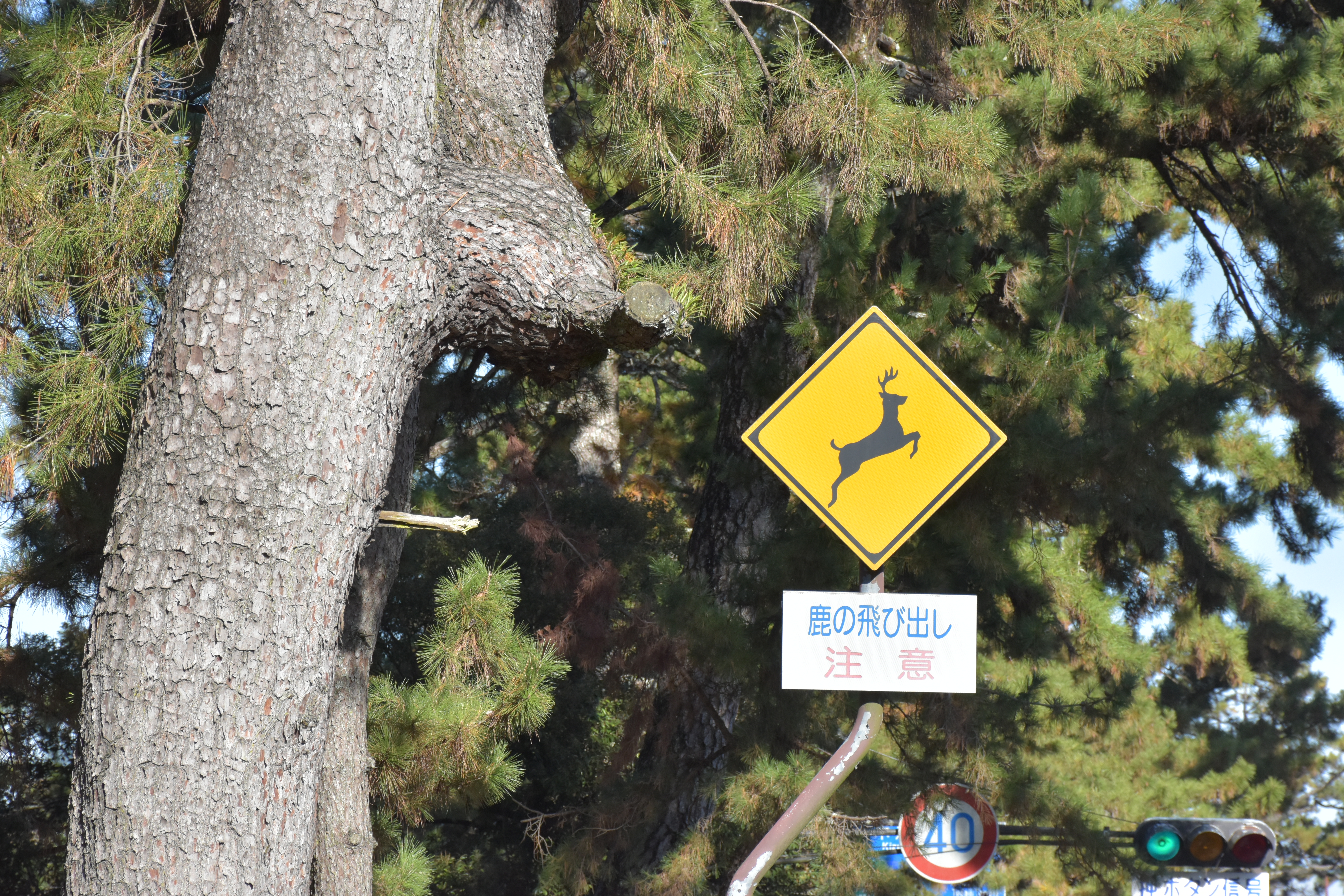
Next to the park is a four-lane road. The deer are not particularly worried about walking through traffic.
Kintetsu-Nara station is near to Nara Park, but JR Nara station is a bit over a kilometer away, so I took a short walk. I also visited the Taito arcade near JR Nara station to see if they had a Densha de Go! machine but they didn’t.
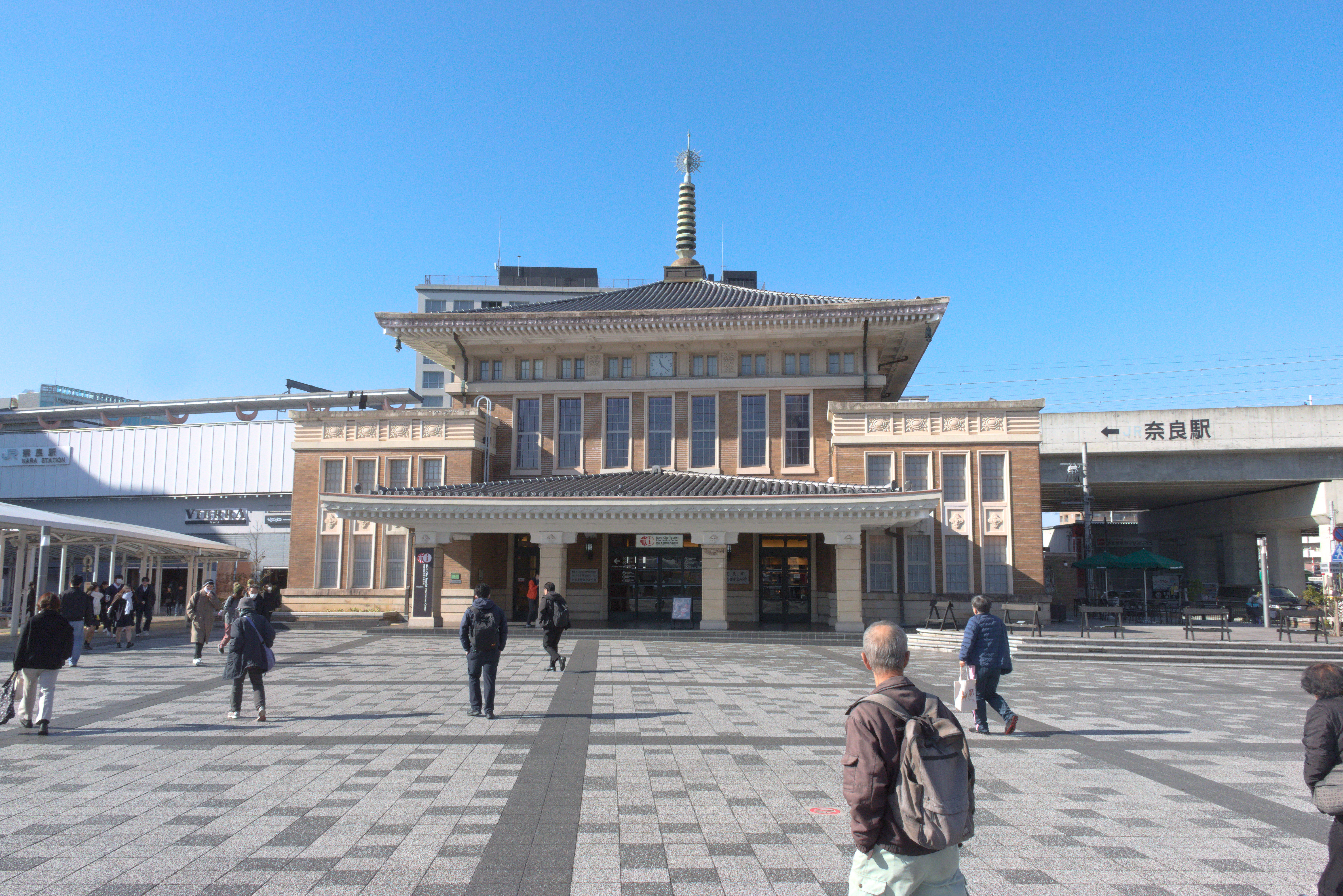
JR Nara Station
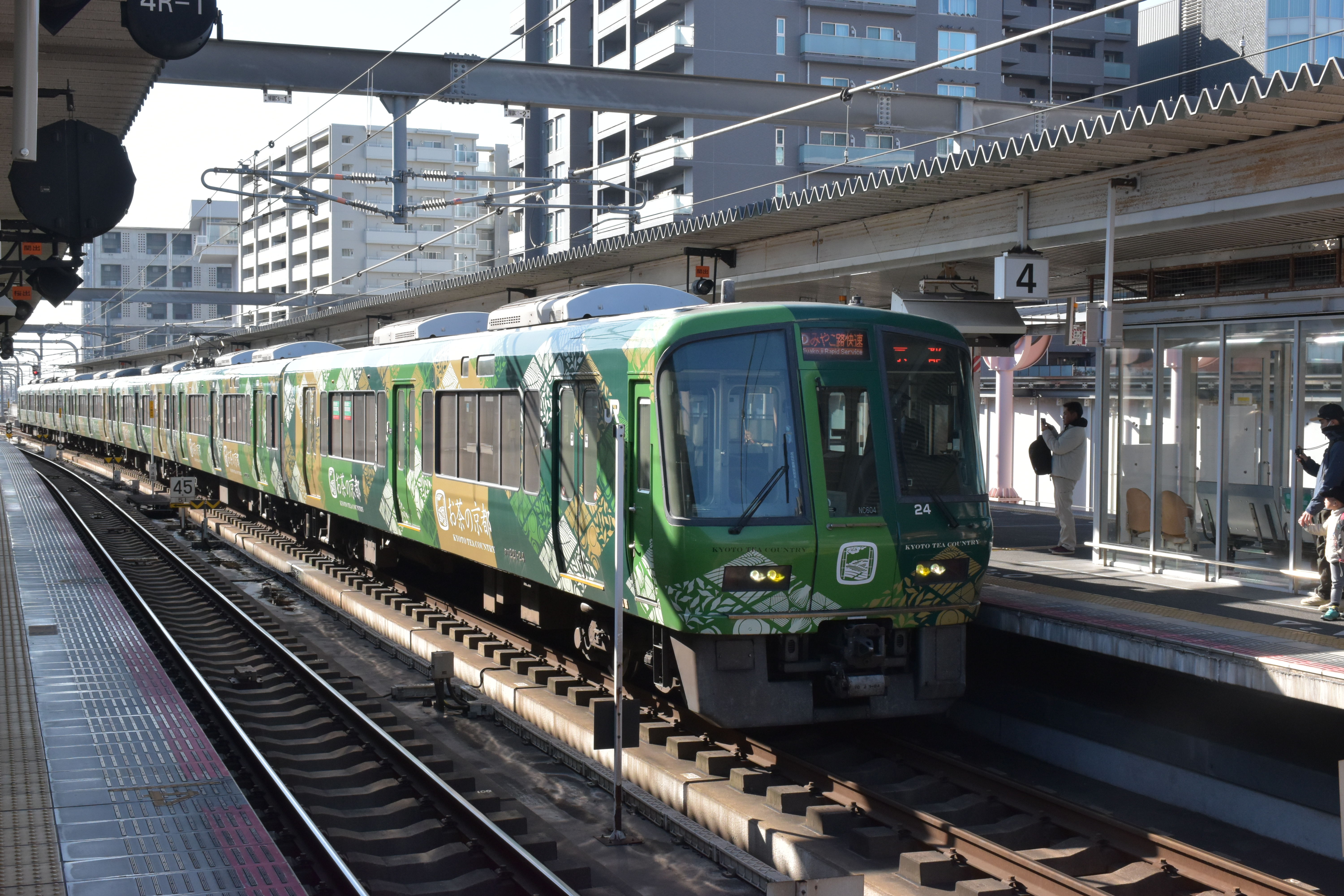
The 221 Series is one of JR West’s workhorses.
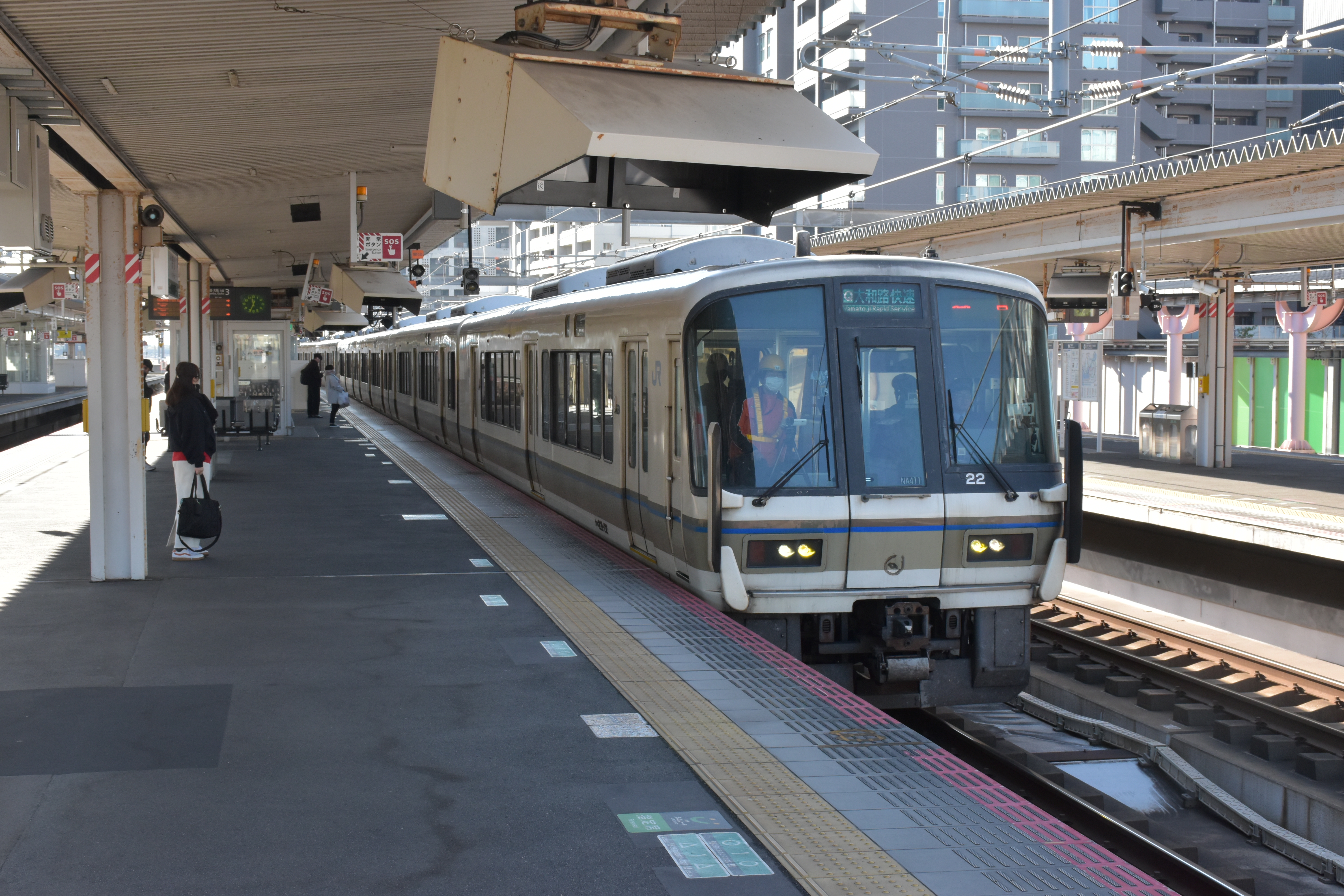
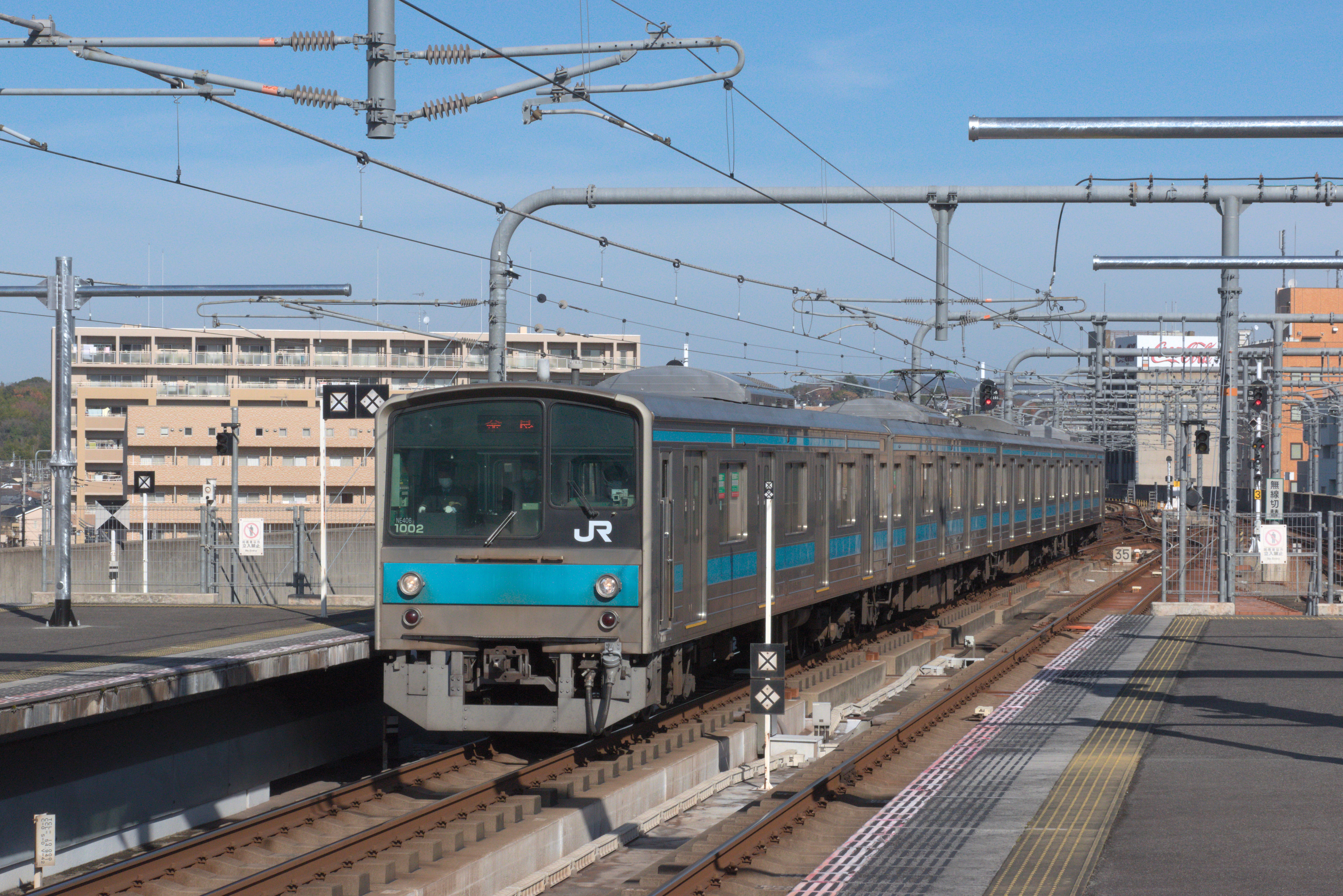
The local train from Kyoto was running with a 205 Series train.
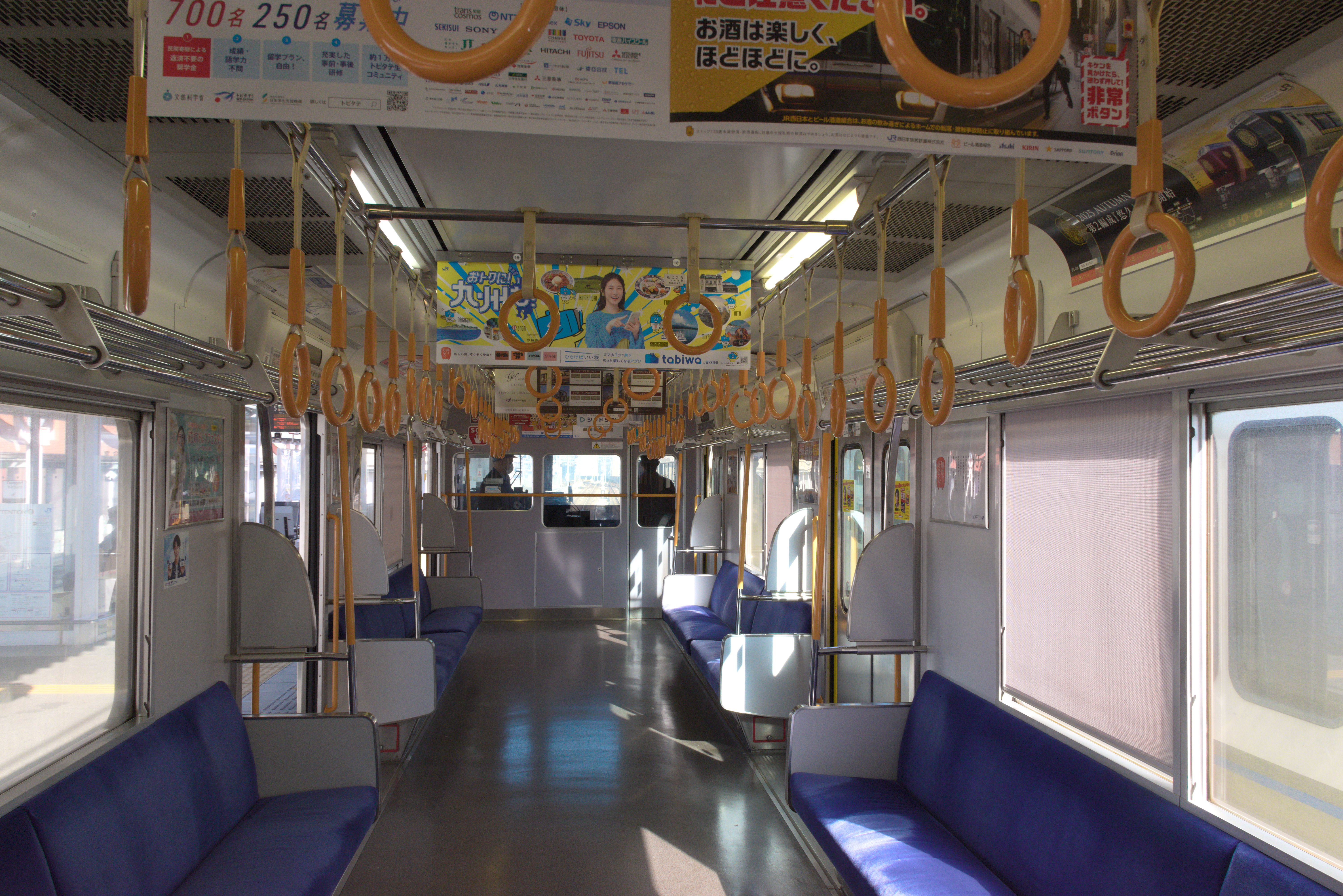
205 Series interior. As my main target today was the 103 Series, I chose not to ride this train and only got a quick snapshot.
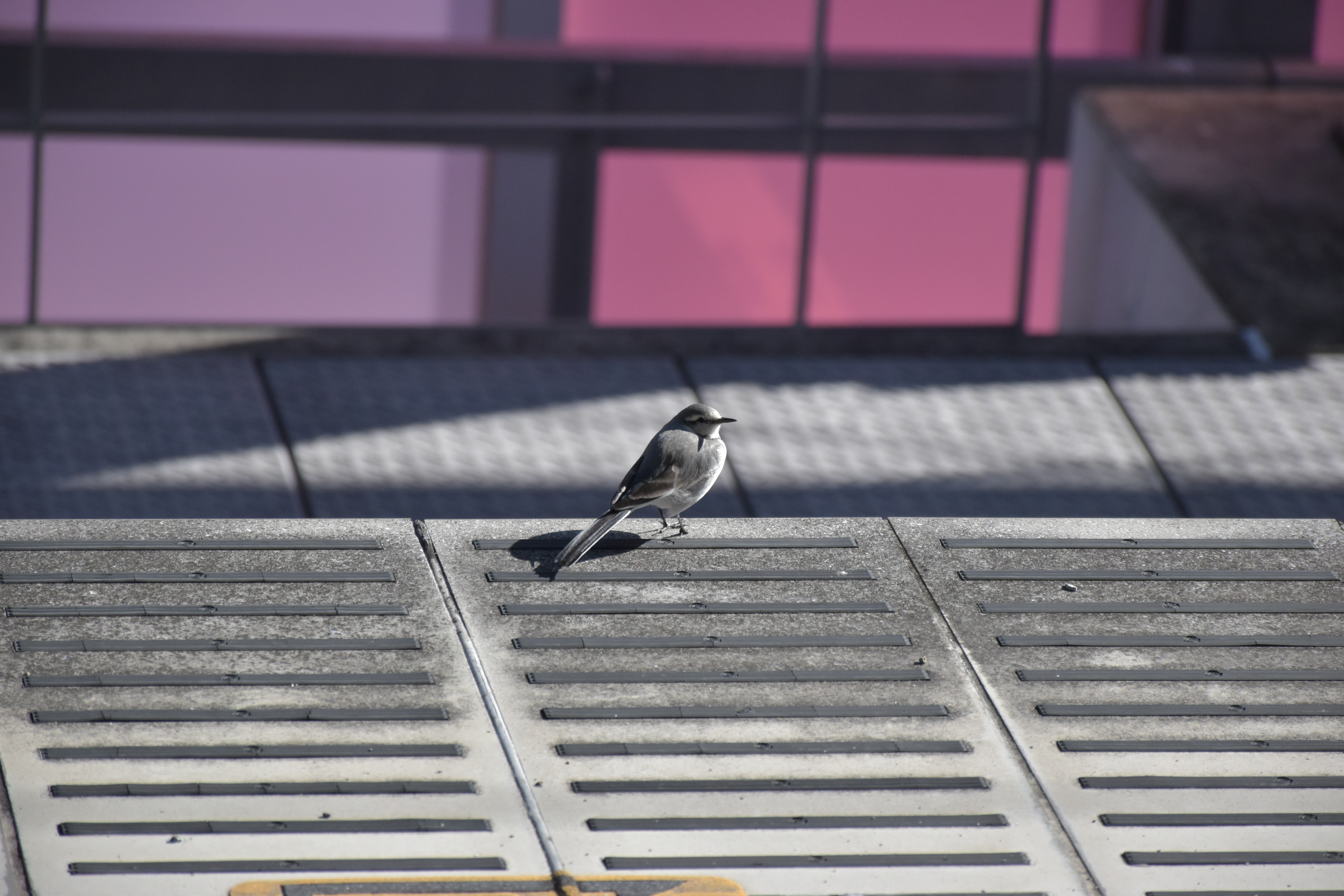
birb
Unfortunately, the Sakurai Line train to Takada turned out to be a 227 Series EMU. I chose to get on regardless, hoping that maybe one of the other trains running on the route would be a 103 Series. But the first train to pass us was another 227, and when I left the train at Sakurai to wait for the next train back to Nara, that train also turned out to be a 227.
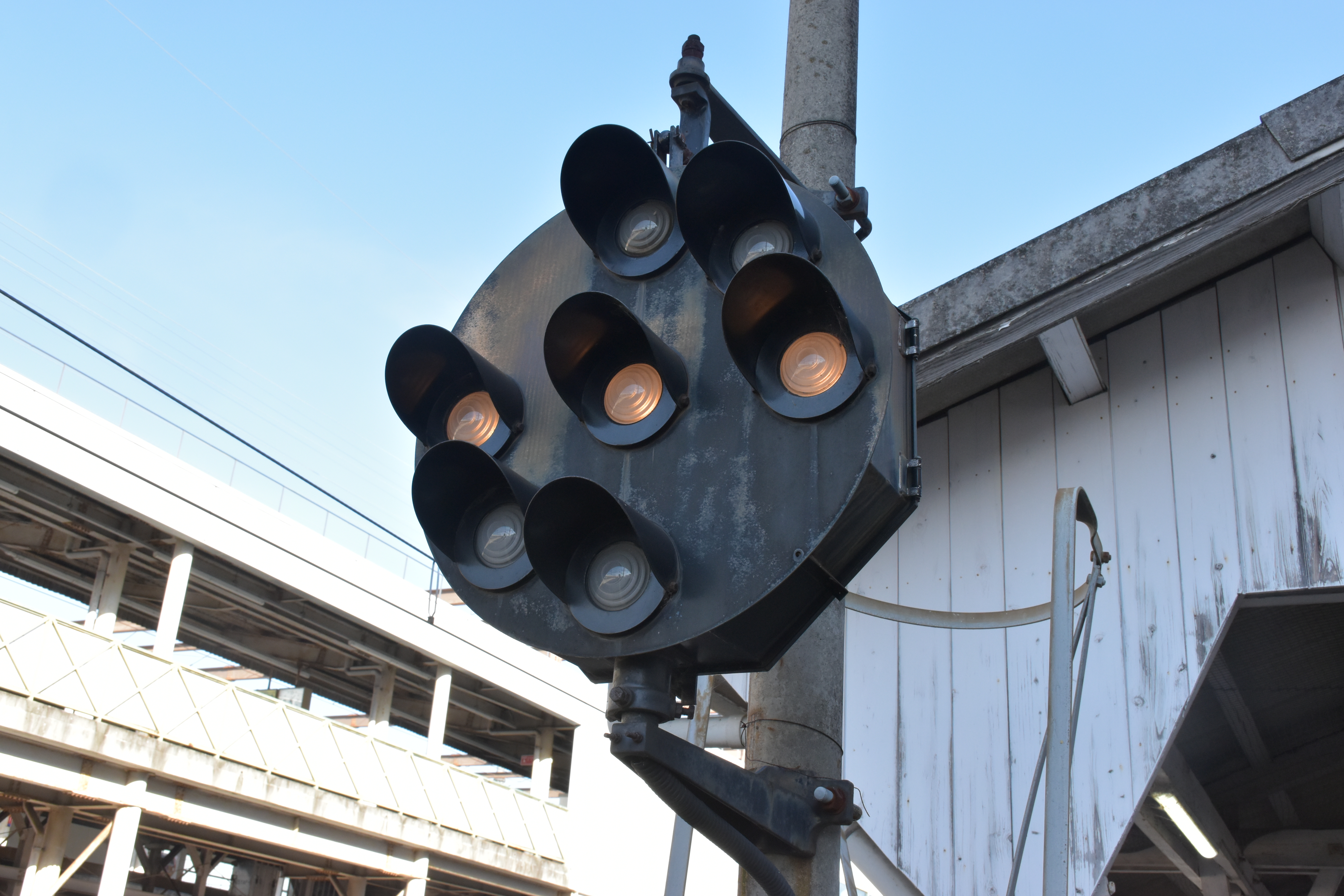
Signal repeater at Sakurai (JR)
Frustrated, I decided to take the Kintetsu Osaka line back to Osaka.
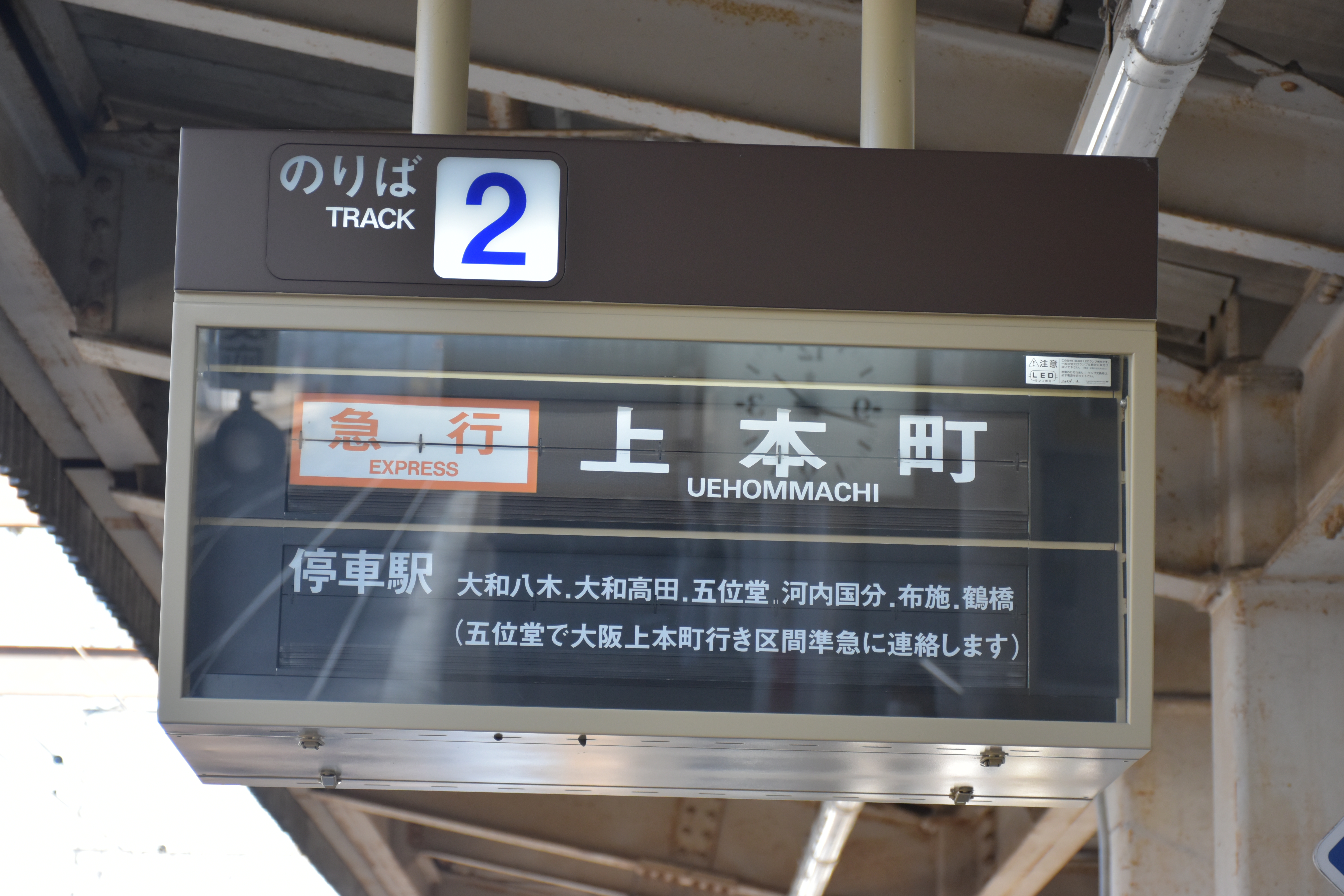
Split-flap display at Kintetsu-Sakurai station
Wednesday December 24th - Arcade and chill
I felt like I needed another day to rest a bit, and I was also unsure how Christmas would affect traffic, so I decided to walk to a nearby arcade. This time I checked online where I could find a Densha de Go! machine, and at the Taito Station in Osaka-Nippombashi (in walking distance of my hotel), I found not only four of the current (2017) machines but also six older cabinets, including the tramway version which includes Enoshima Dentetsu. Those older cabinets all still have CRT monitors, and their graphic fidelity makes recognizing upcoming stations, speed limits, and signals very tough. It is also easy to get a game over on those older machines, whereas the 2017 iteration will almost always let you drive the distance you have paid for (which, at 500yen for 4 to 6 stations, is rather pricey compared to 100yen for a similar amount of playing time on the older machines) and then give you a “pass” or “fail” ranking based on your performance. Still, playing through those older machines, all of which have different controls based on the vehicles represented in the game, was a fascinating experience. Even the older machines have a “butt kicker”, a device to induce small knocks into the driver seat to emulate the feeling of rail joints and points, but the 2017 cabinet, especially in its large version, really offers the highest amount of immersion I’ve ever had in a train simulator, with additional monitors for the side windows, a touchscreen for the train information display (which also has interactive features to emulate the Japanese safety practice of “pointing and calling”), and a master controller lever that simply feels amazing to operate. The whole thing is not quite built for my 1.95m tall European ass, though. Getting my legs below the driver’s desk in a way that allows me to operate the pedal for the horn was uncomfortable as all hell.
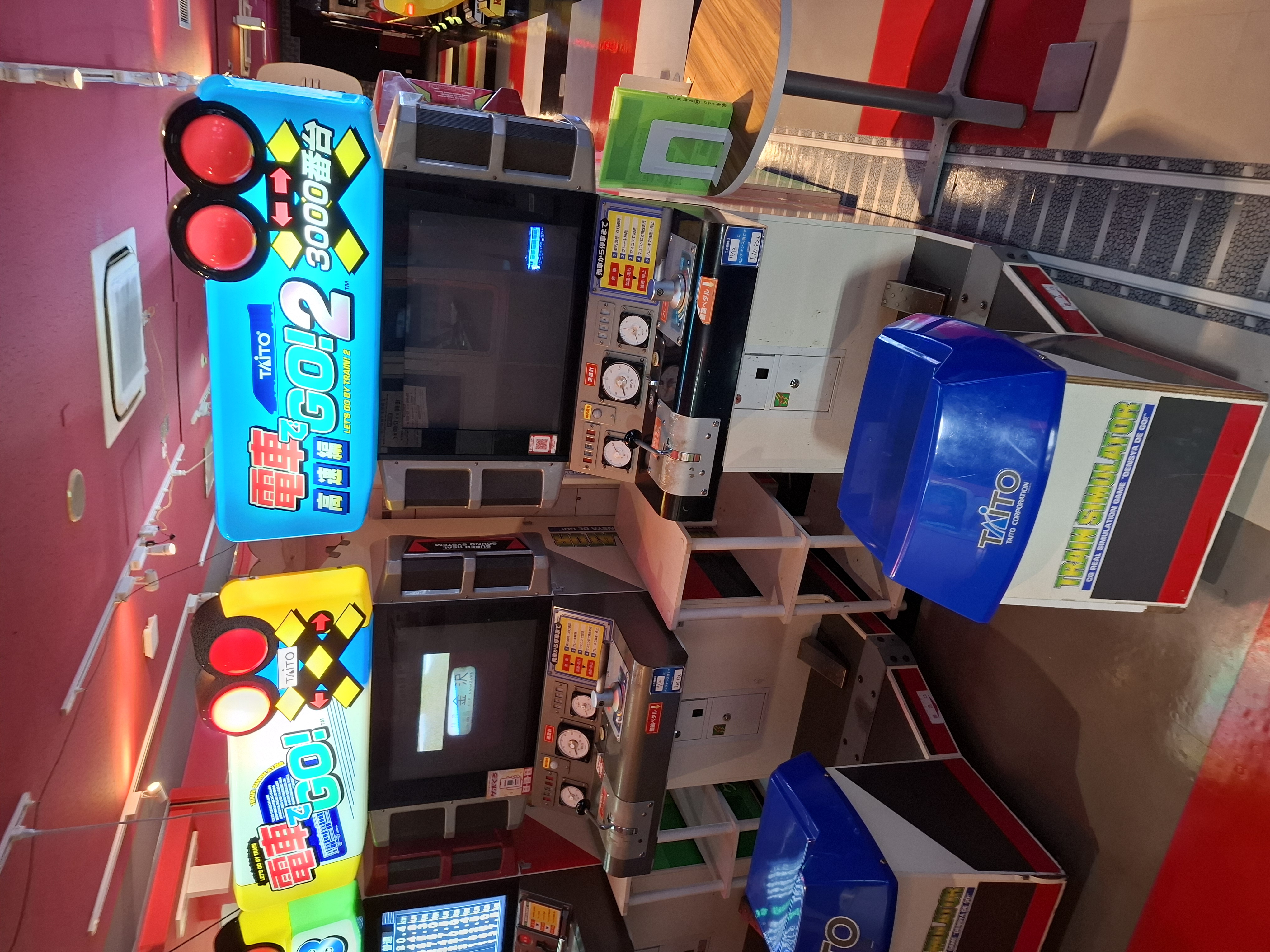
I also tried a few of the rhythm games on offer, and would occasionally go into random arcades to play a few rounds of Taiko no Tatsujin, Gitadora, Chuunithm, or that one weird round one that I don’t know the name of.
Thursday December 25th - Kyoto Railway Museum
Time for railway museum #2, in Kyoto this time.
JR’s rapid trains between Osaka and Kyoto were once again “severely” delayed, by a whole 11 minutes.
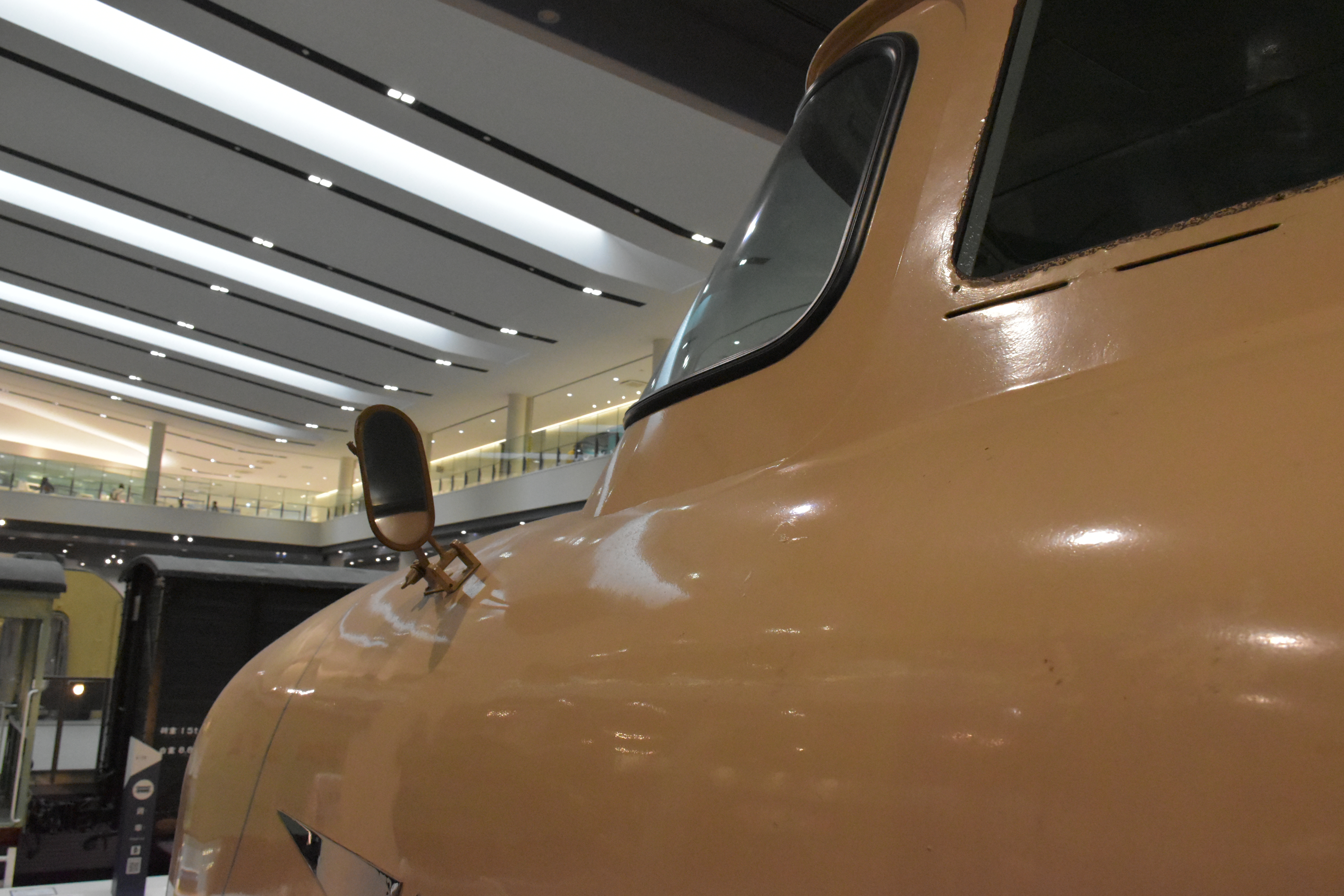
As a consolation price for the events of December 23rd, this museum at least has a 103 Series car on static display - but seeing a train is one thing, riding it, hearing it and feeling its controls operate is an entirely different thing.
Overall, I did like this museum but prefer the one in Saitama. Kyoto is far more protective of its train interiors, so visitors can not enter most of the vehicles shown. Some trains are also displayed in such a way that looking at anything below the floor is impossible, and that just happens to be where all the interesting technology is.
On the other hand, Kyoto has some exhibits on signalling technology and a large collection of steam engines. I care about the former, but the latter is not really a selling point for me. I am far more interested in electric traction, especially when it comes to Japan. I still think the museum is among the best railway museums I’ve seen, but Saitama has it beat.
After that, I took a trip to Otsu with the Keihan Keishin Line, an interurban line which shares tracks with the Kyoto metro, then runs on its own tracks for a bit, navigating some tight turns and steep climbs before street-running on the final stretch in Otsu. This is another line I know from BVE. For the return trip, I used a JR train.
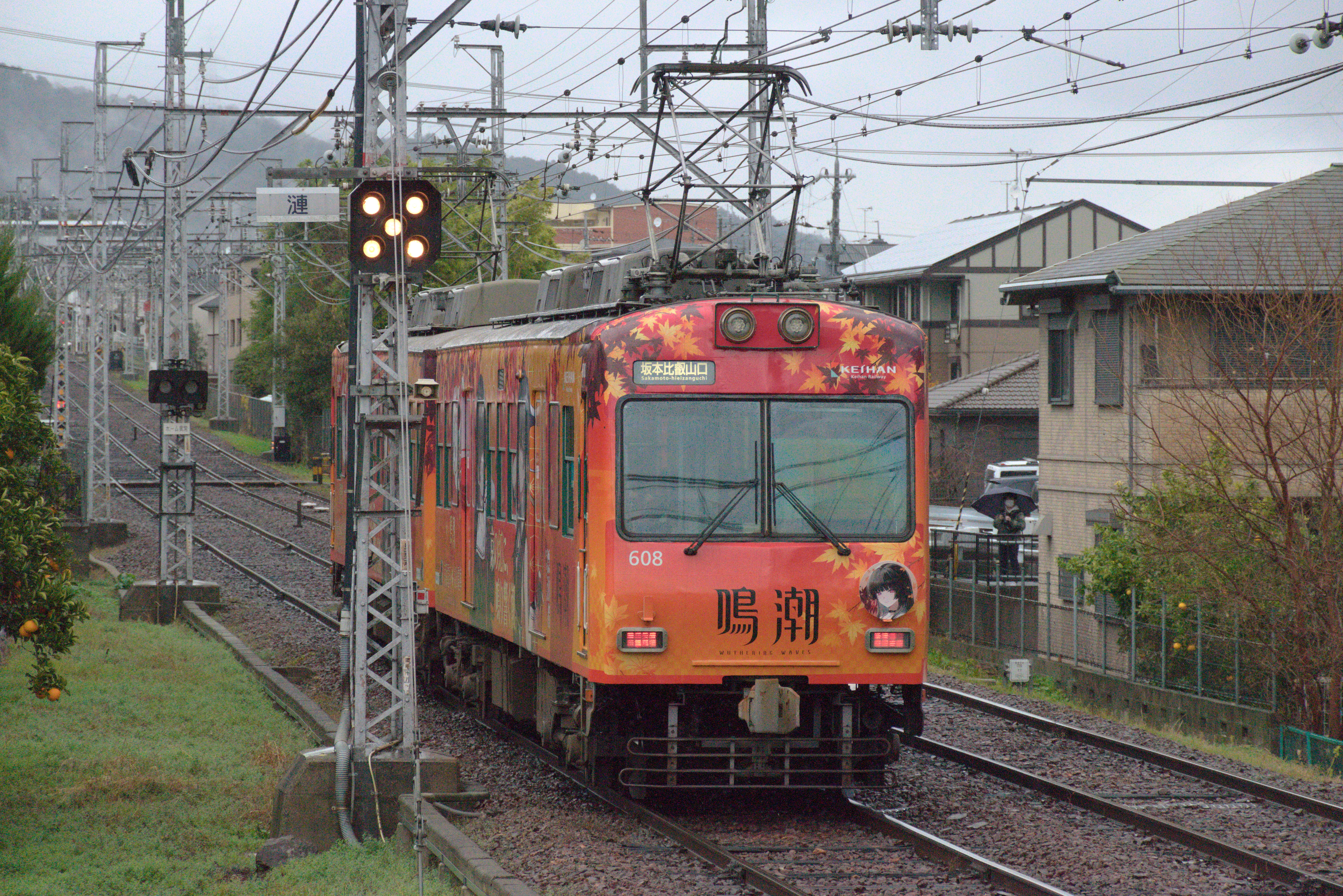
Keihan car 608 near Keihan-otsukyo station, carrying full advertising for Wuthering Waves. This station is in walking distance of JR’s Otsukyo station.
For my return to Osaka, I decided to use a Limited Express on the Hankyu Kyoto line, which - say it with me! - I know from BVE. I got lucky and could sit directly behind the cab and get views on the track.
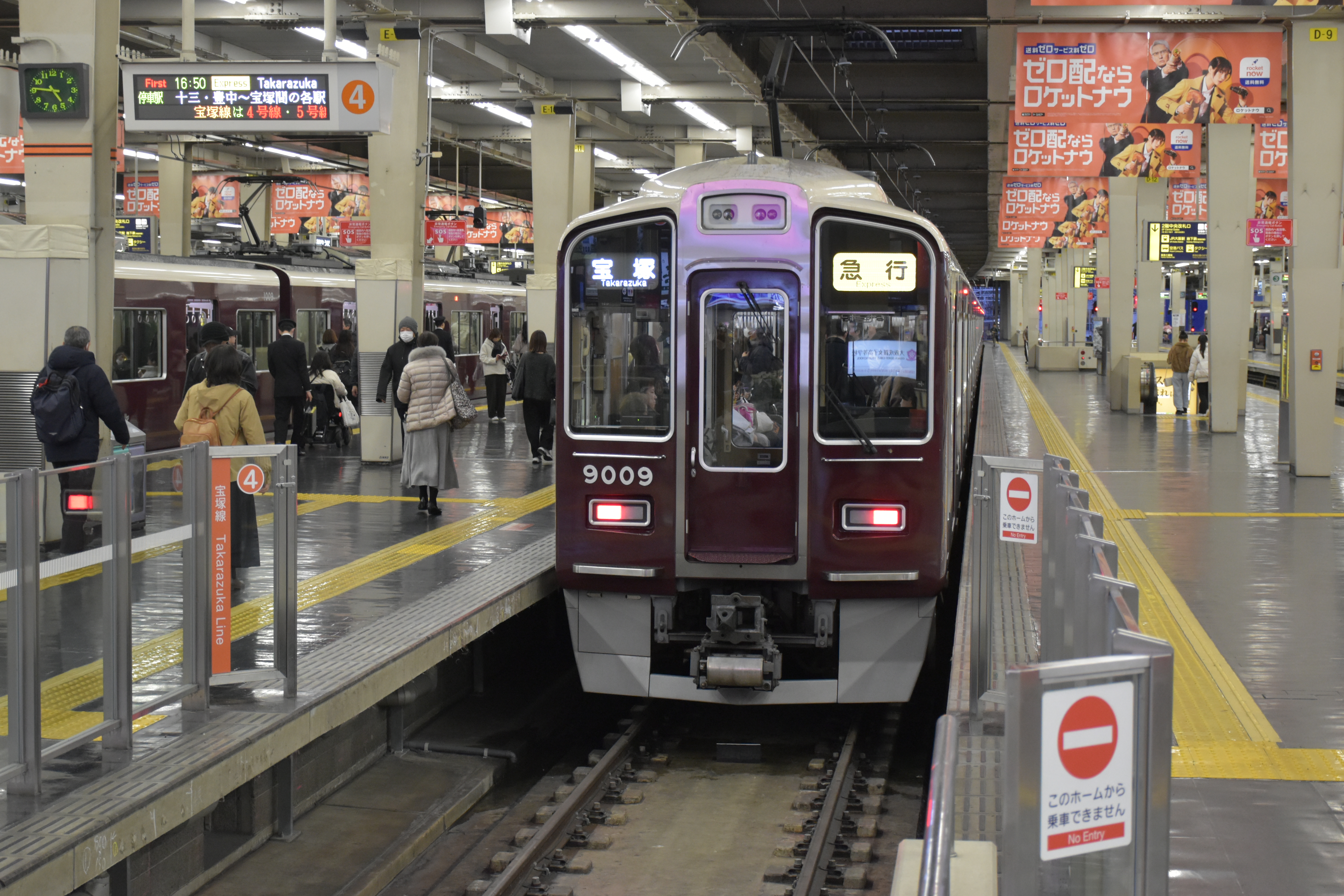
At Osaka-Umeda
For dinner, I visited a small izakaya near to my hotel.
Friday December 26th - Himeji, 103 Series
I had a backup plan for seeing the 103 Series in operation, which was the Bantan Line in Himeji. With this being my last weekday in Osaka, and the weather being reasonably amenable to photography, I decided today was my best shot.
Himeji is served by the Sanyo Shinkansen, but due to the location of my hotel, the Shinkansen station in Osaka, and the effort involved with seat reservations, just using a rapid train from Osaka station turned out to be faster.
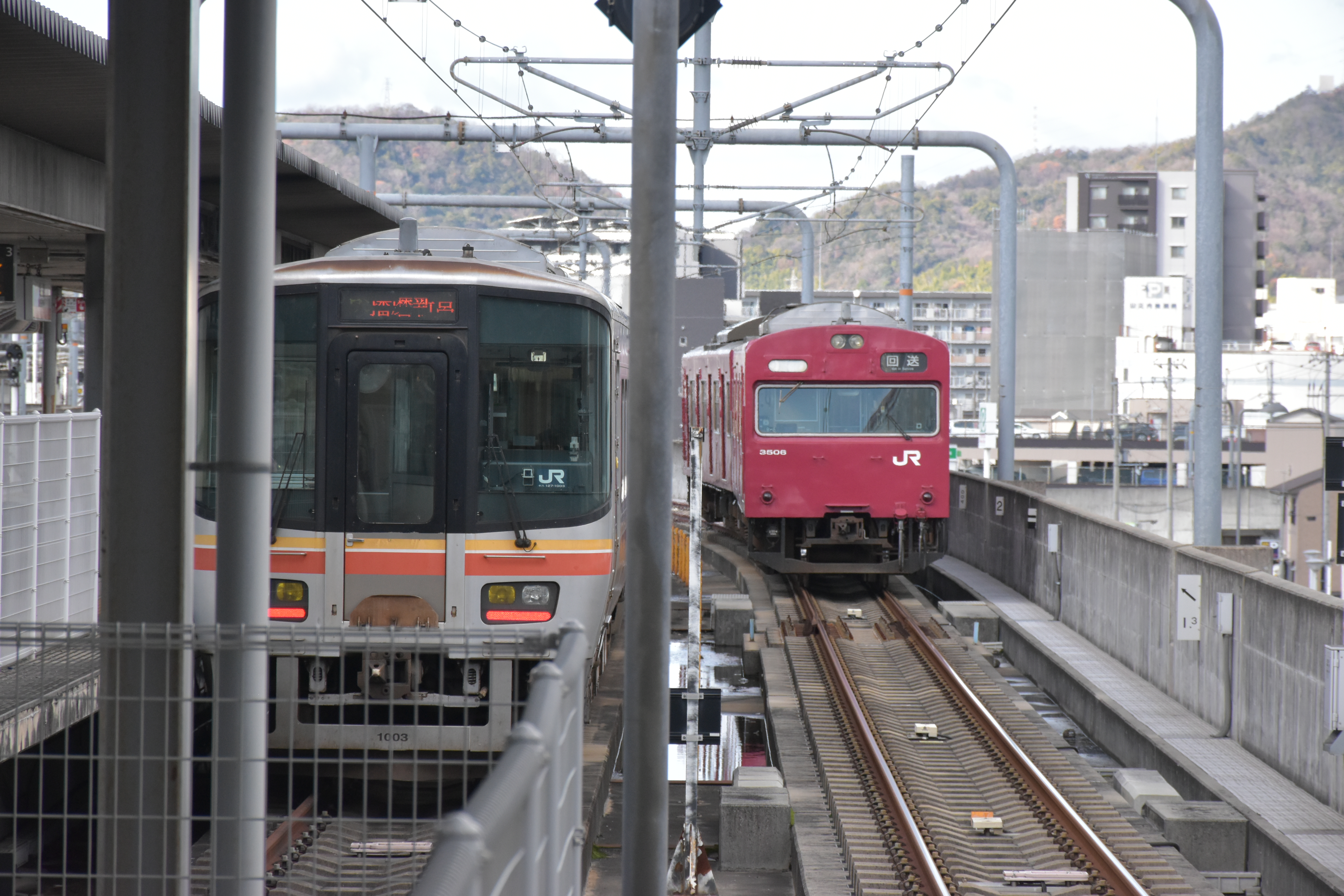
To my relief, I was almost immediately greeted by a parked 103 series train.
The Bantan line 103 series units (103-3500 subseries) are a bit odd. These are two-car trains, which are made up of two former middle cars converted into end cars in the late 90es. While they look a lot like the classic 103-0 from the outside, their cabs are vastly different from those of the original series.
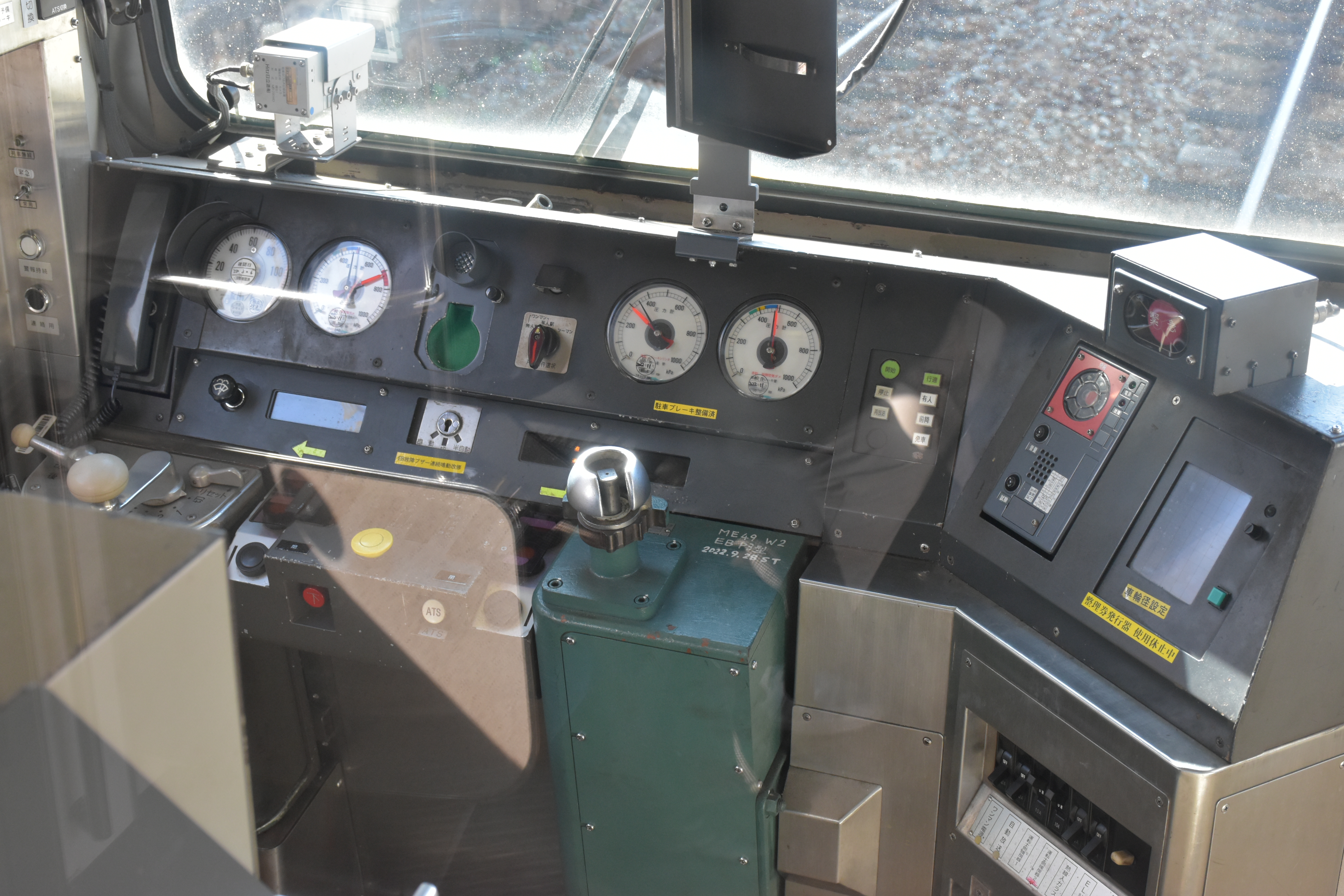
103-3500 cab

Classic 103 Series cab, for comparison (Kyoto Railway Museum)
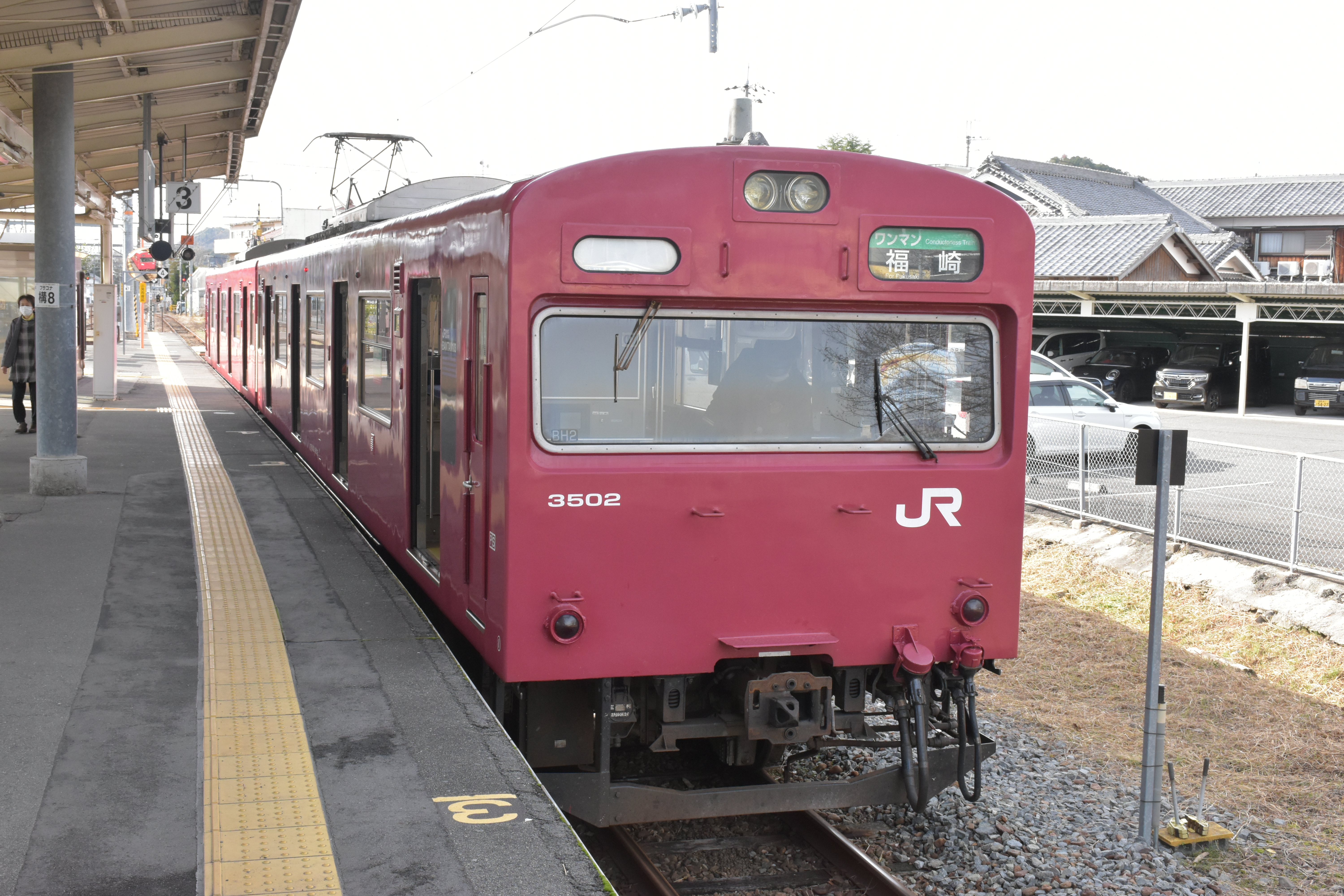
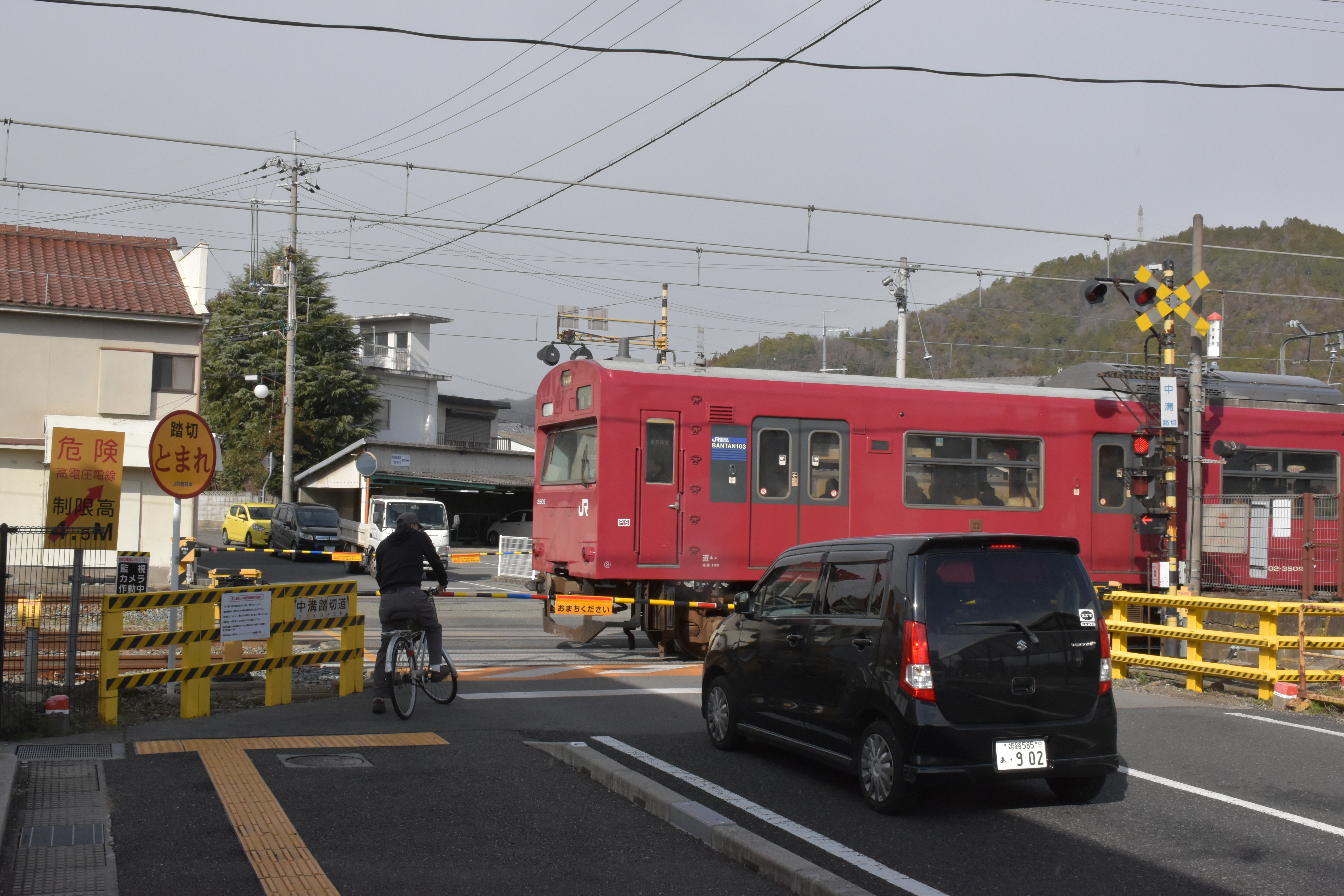
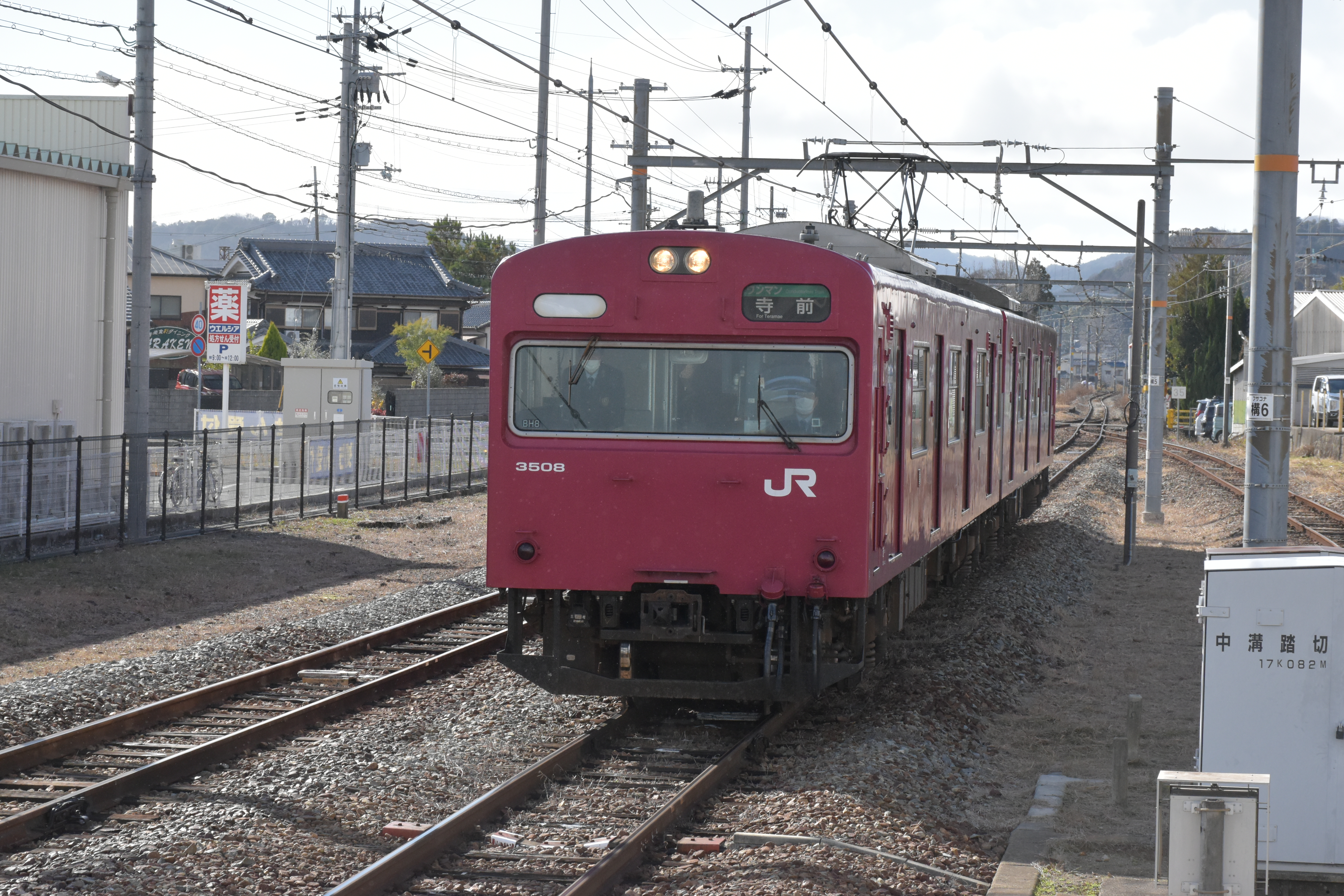
My train only went to Fukusaki, so I ate a karaage teishoku there, and continued to Teramae with the next train. The three photos above are all from Fukusaki.
I continued to Teramae with the next train. Teramae is where the electrified section of the Bantan Line ends, and the Teramae - Wadayama section is operated by diesel railcars. Unfortunately, the connection between the two services is a bit shit, and the train to Wadayama left 35 minutes after the train from Himeji and Fukusaki had arrived. While waiting, sleet began to fall, which soon turned to thick snowflakes.
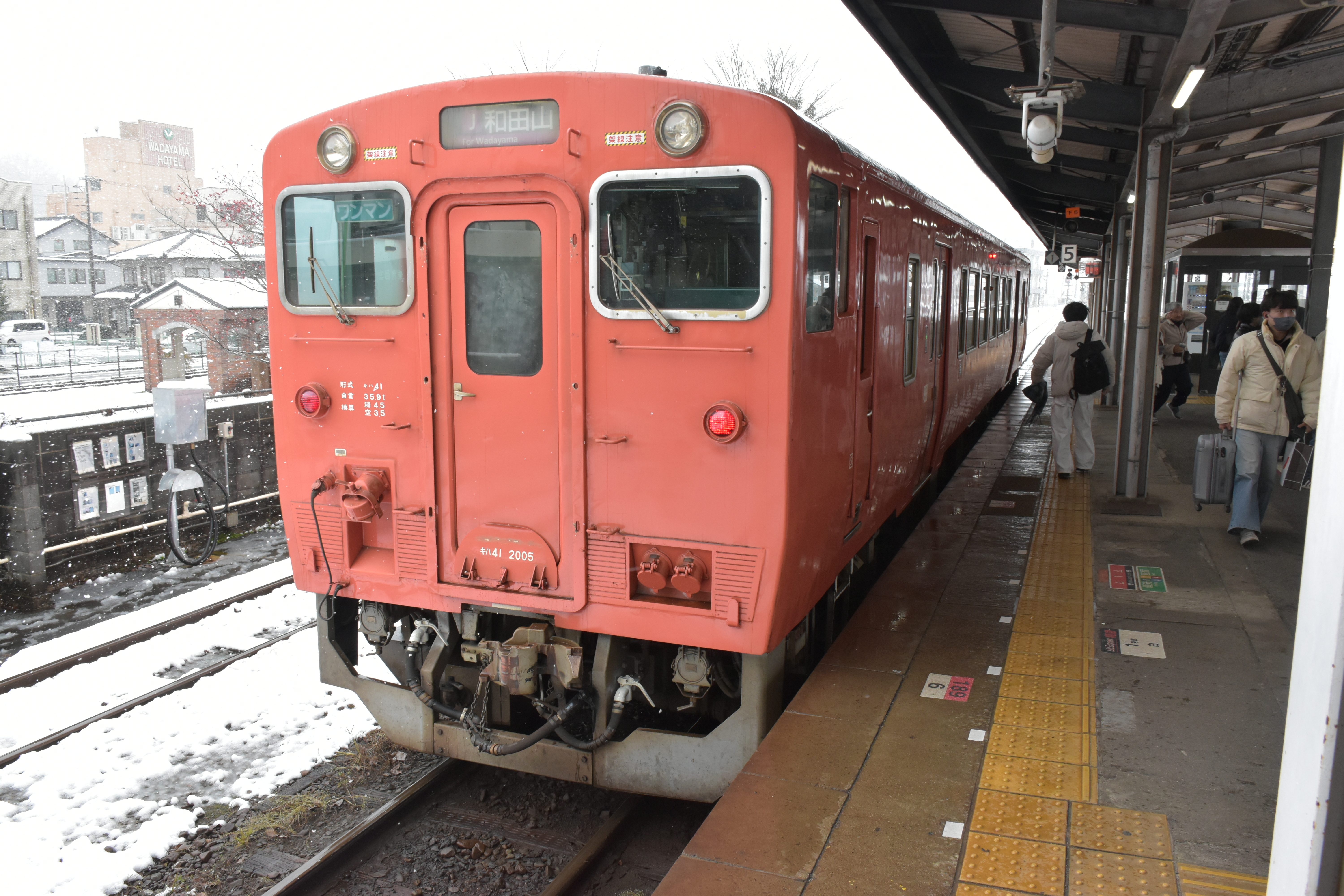
Our KiHa 41 still arrived at Wadayama on time. Meanwhile, I had booked a seat for the Kounotori Limited Express back to Osaka, via Takarazuka and Amagasaki.
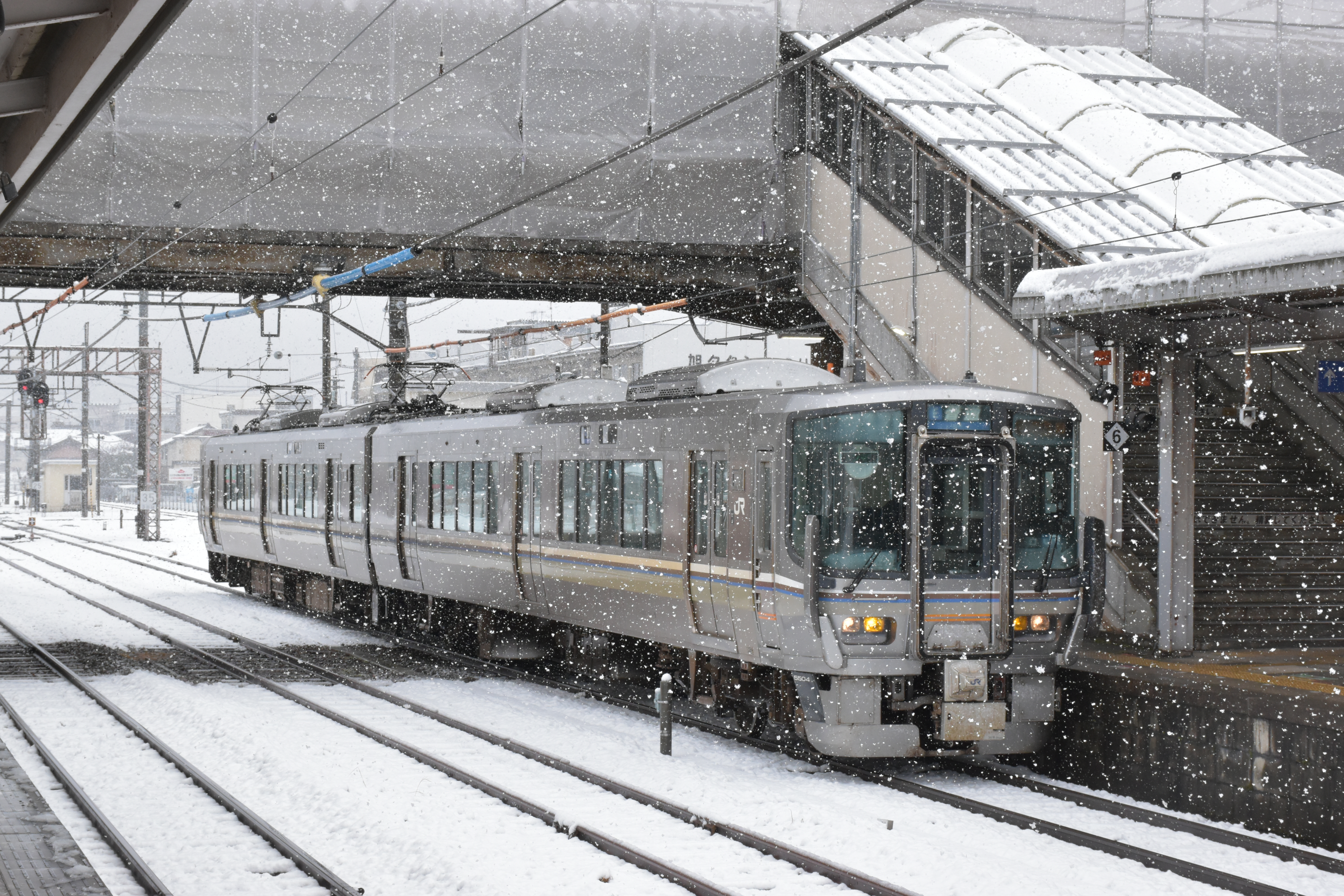
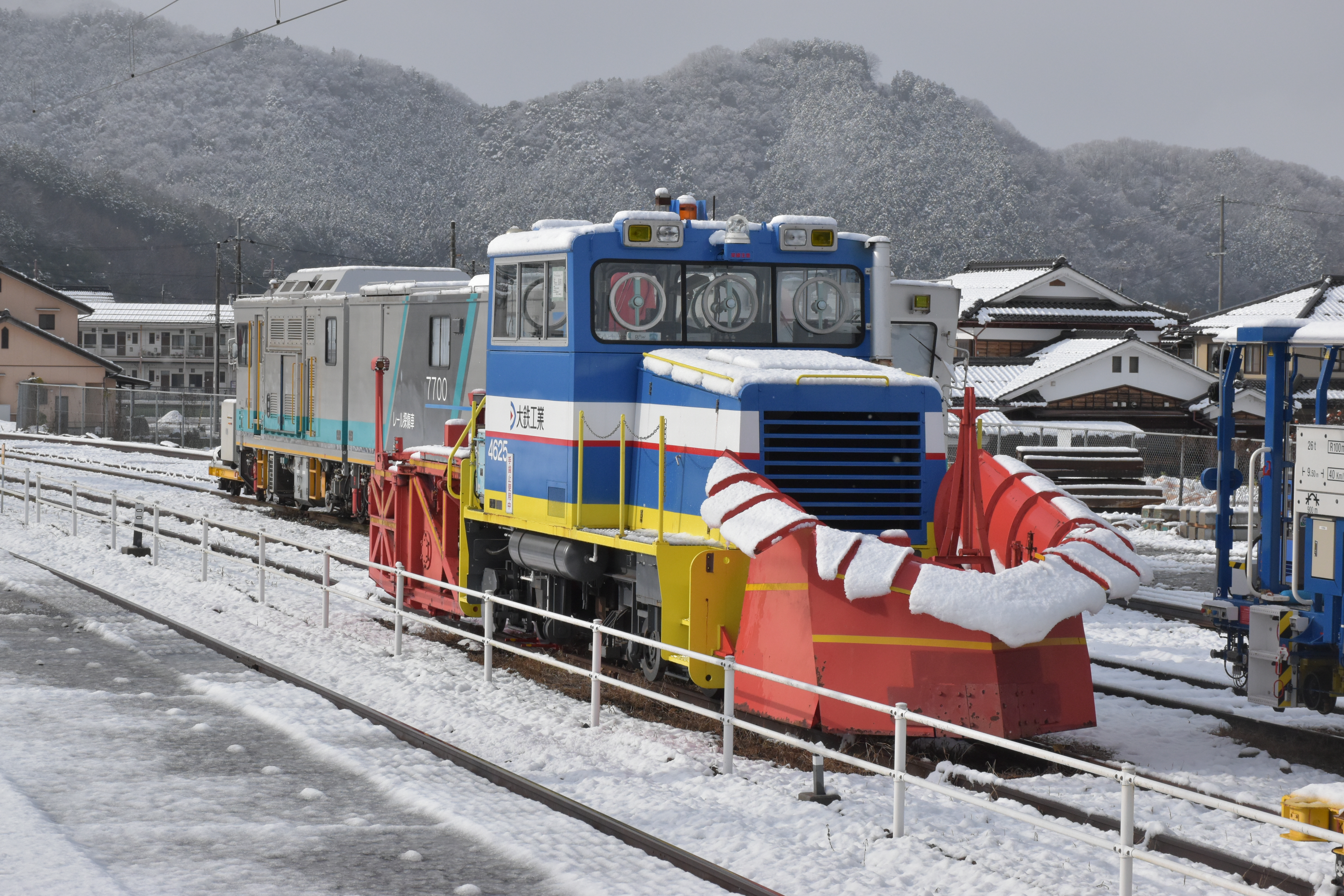
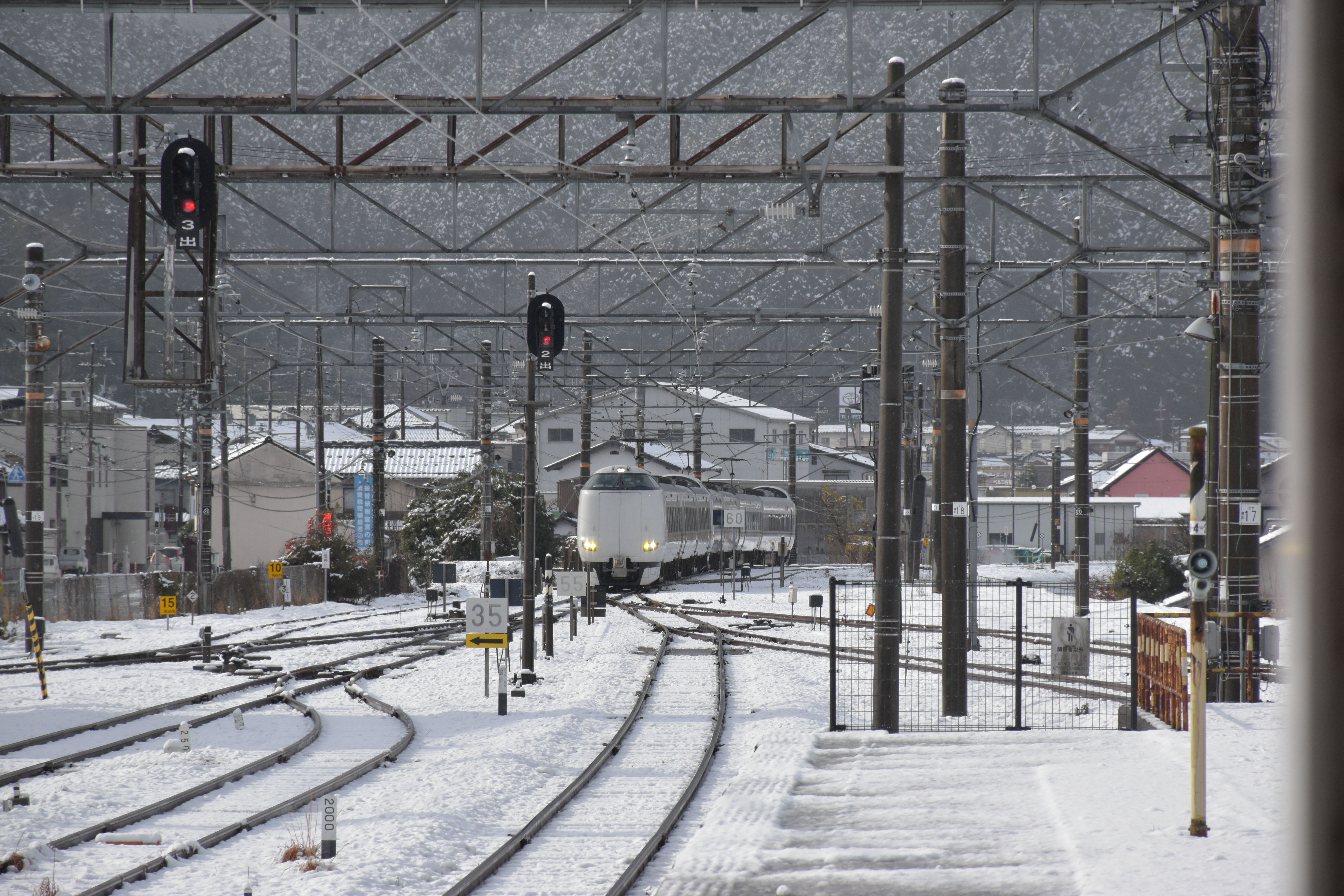
The three photos above are all from Wadayama, the last one shows my train approaching.
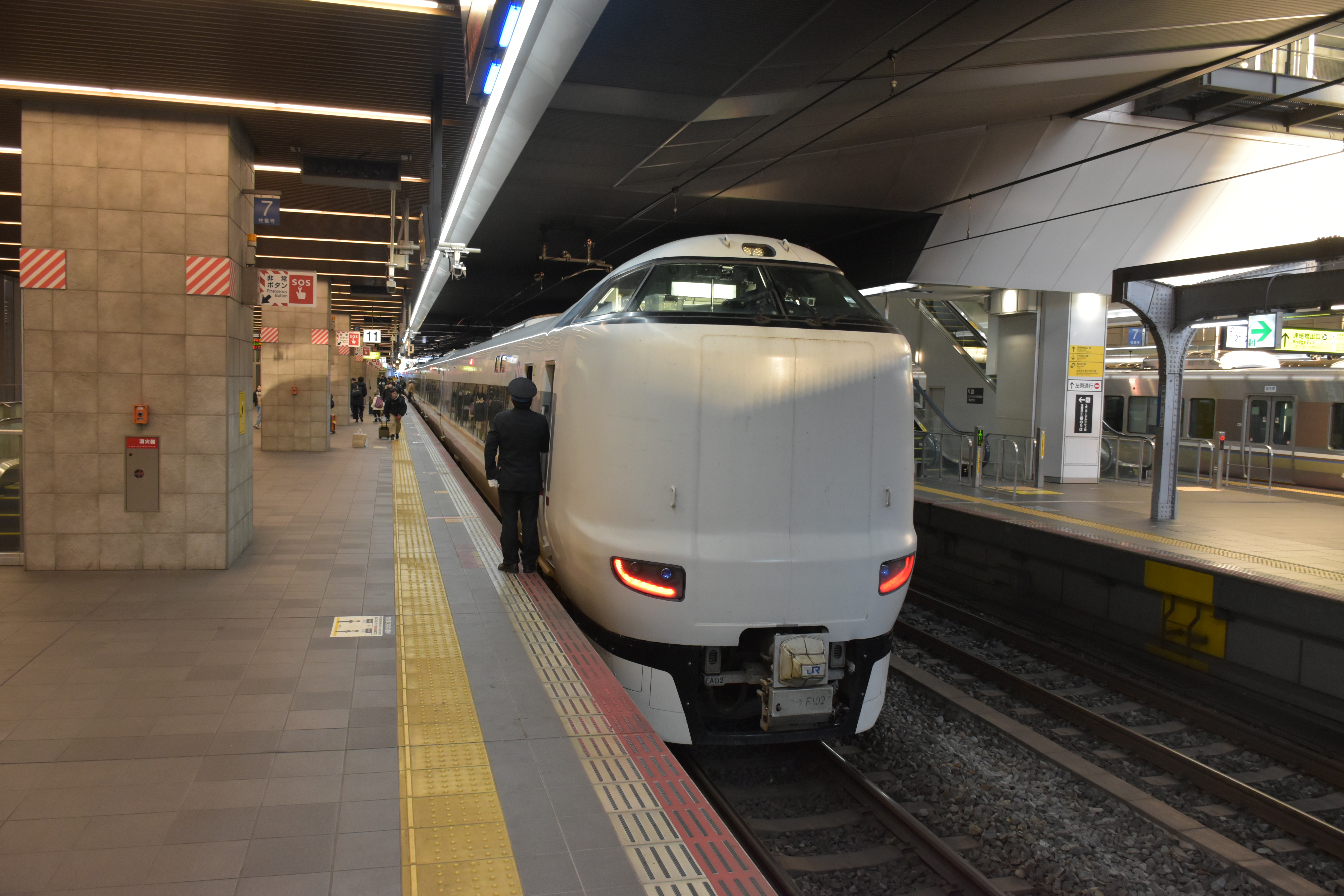
Back down in Osaka, the weather was still sunny and dry.
I had some curry udon for dinner near my hotel.
Saturday December 27th - Osaka
I decided to stay in Osaka for the day, and do some things that would not require too much walking or standing, because I was honestly fairly tired.
Thus, the first item on the list was Hankai’s streetcar.
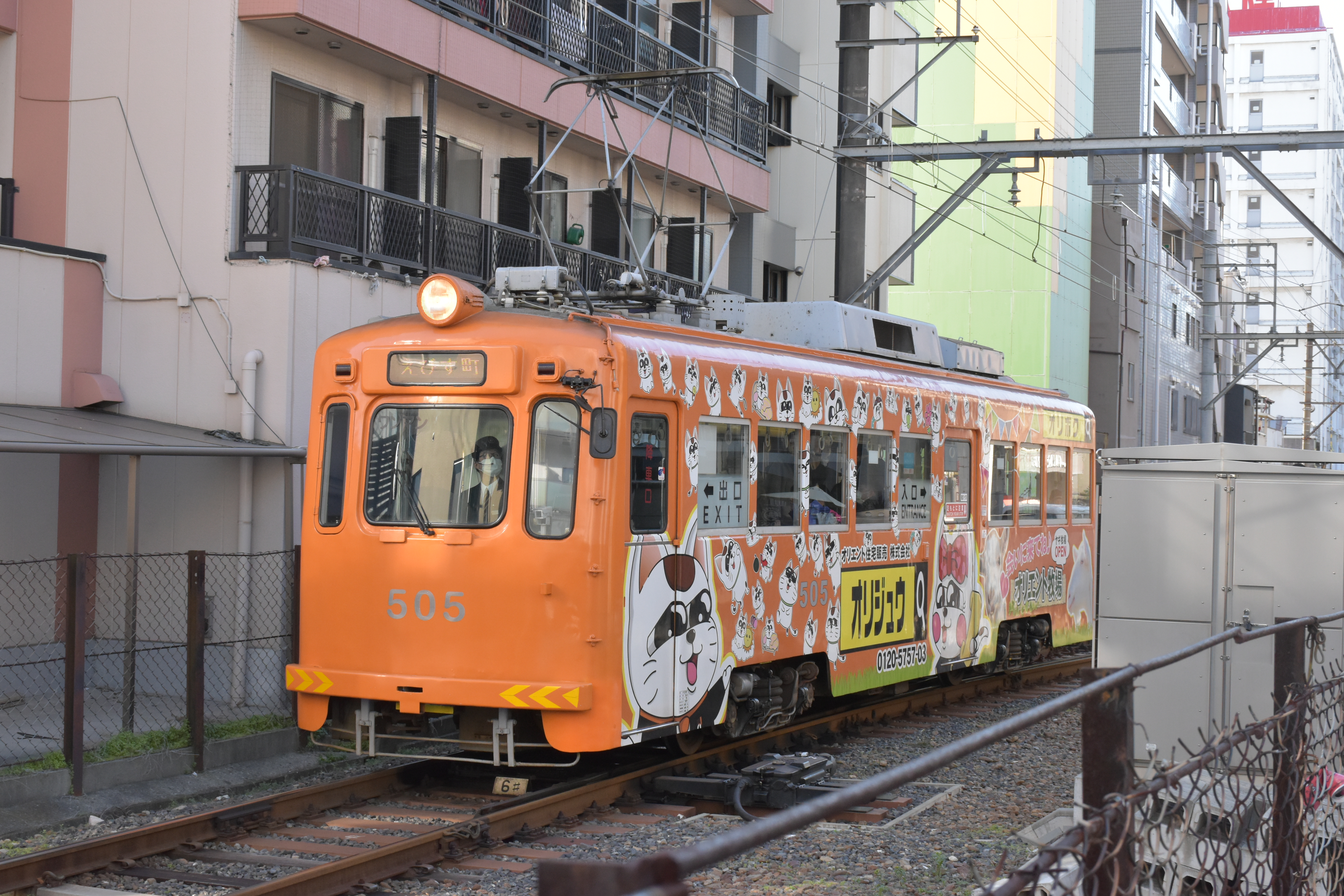
A 501 Series car approaching Ebisucho, the northern terminus of the Hankai Line.
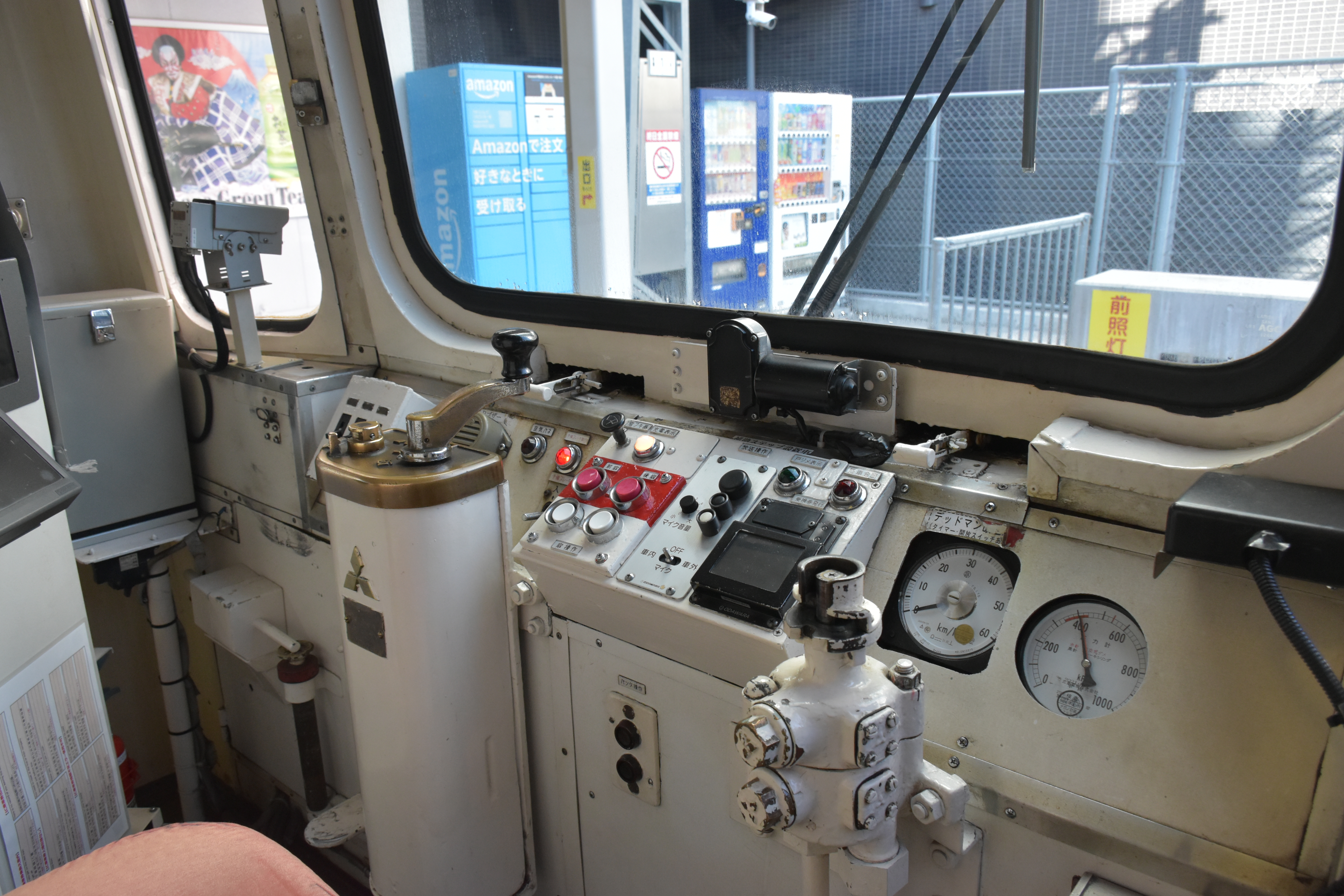
501 Series cab
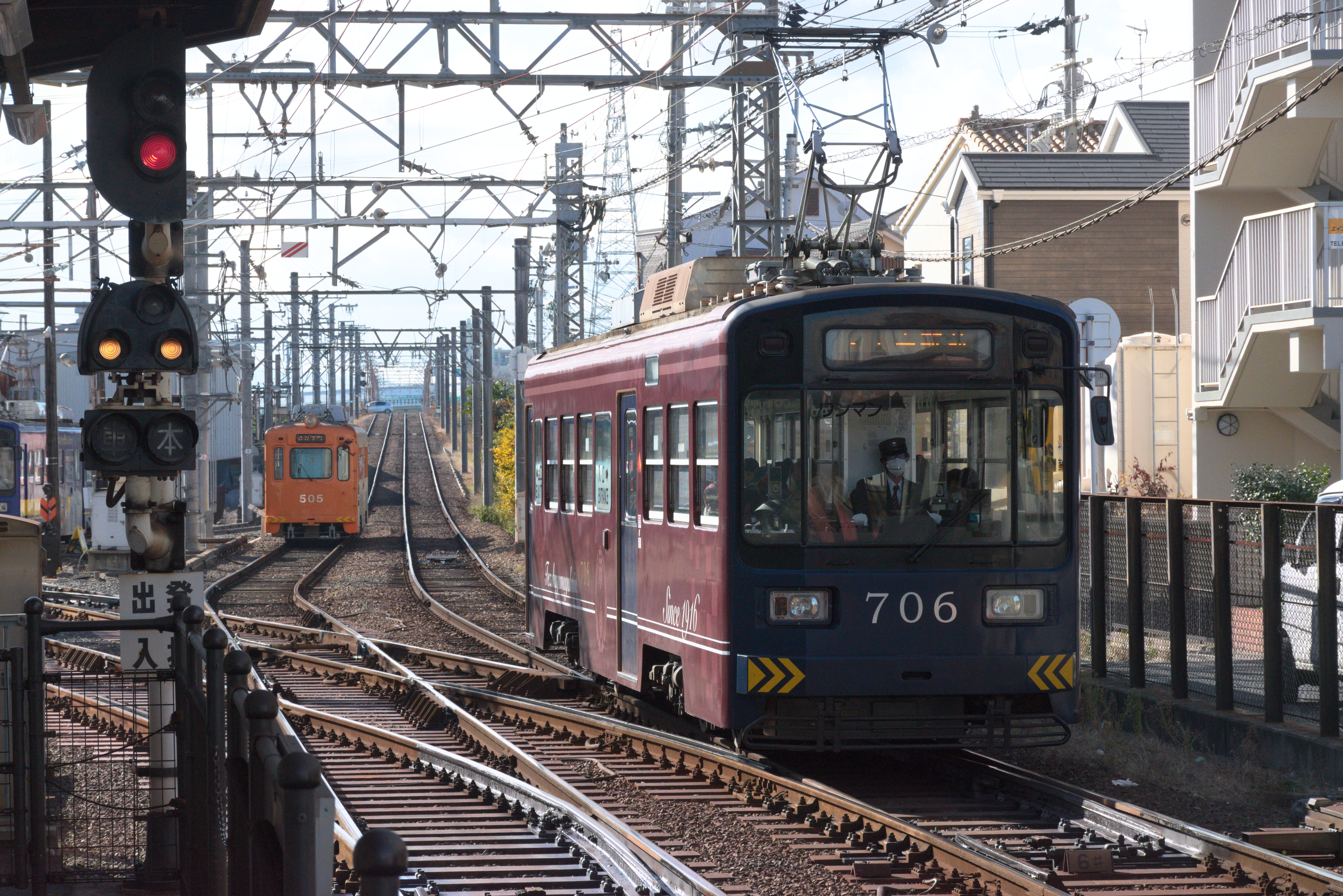
701 Series meeting 501 Series at Abikomichi. Hankai Line trams usually end here, and Uemachi Line trams continue southwards to Sakai.
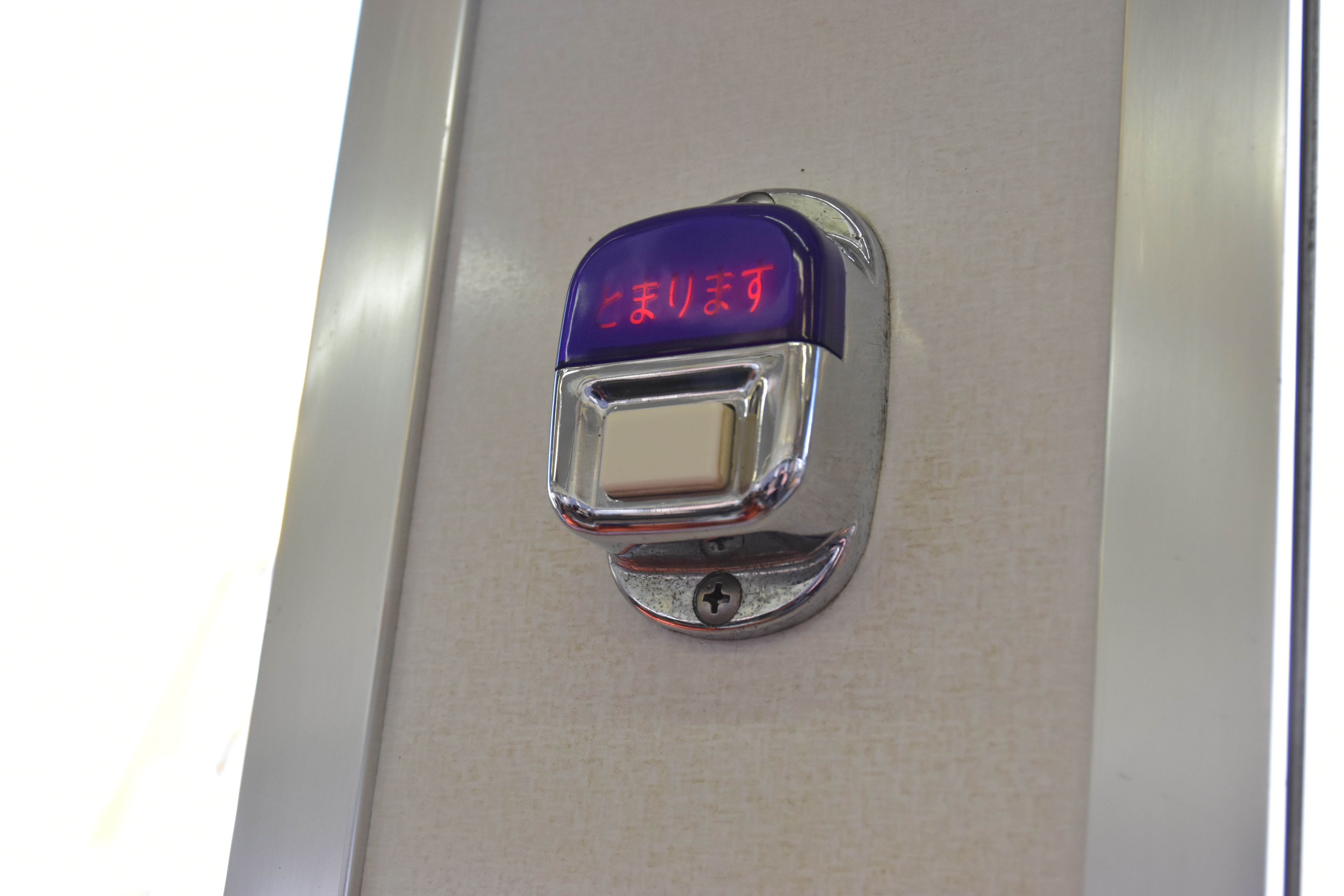
Stop request button on a 601 Series car. The lamp reads “とまります”.
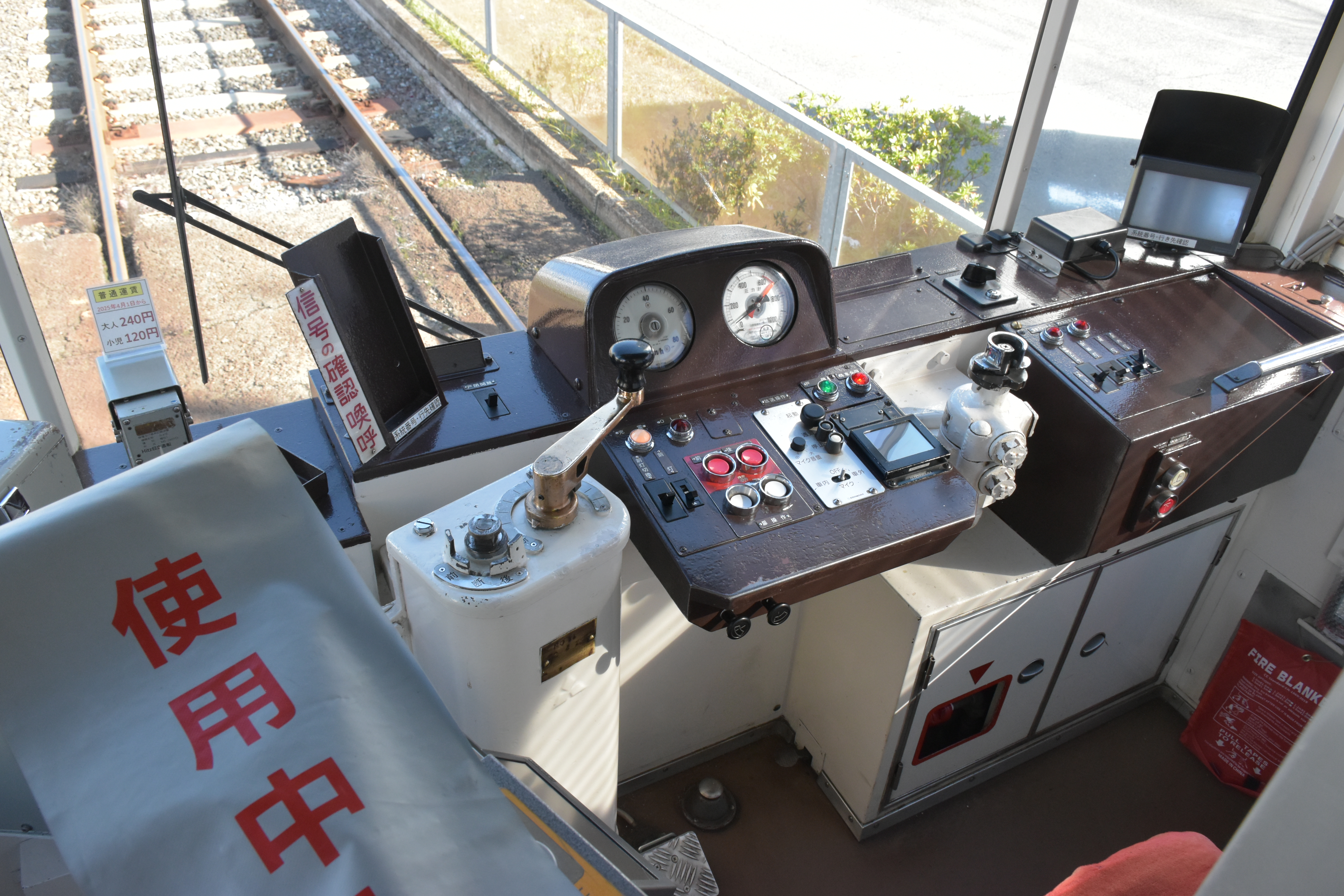
601 Series cab
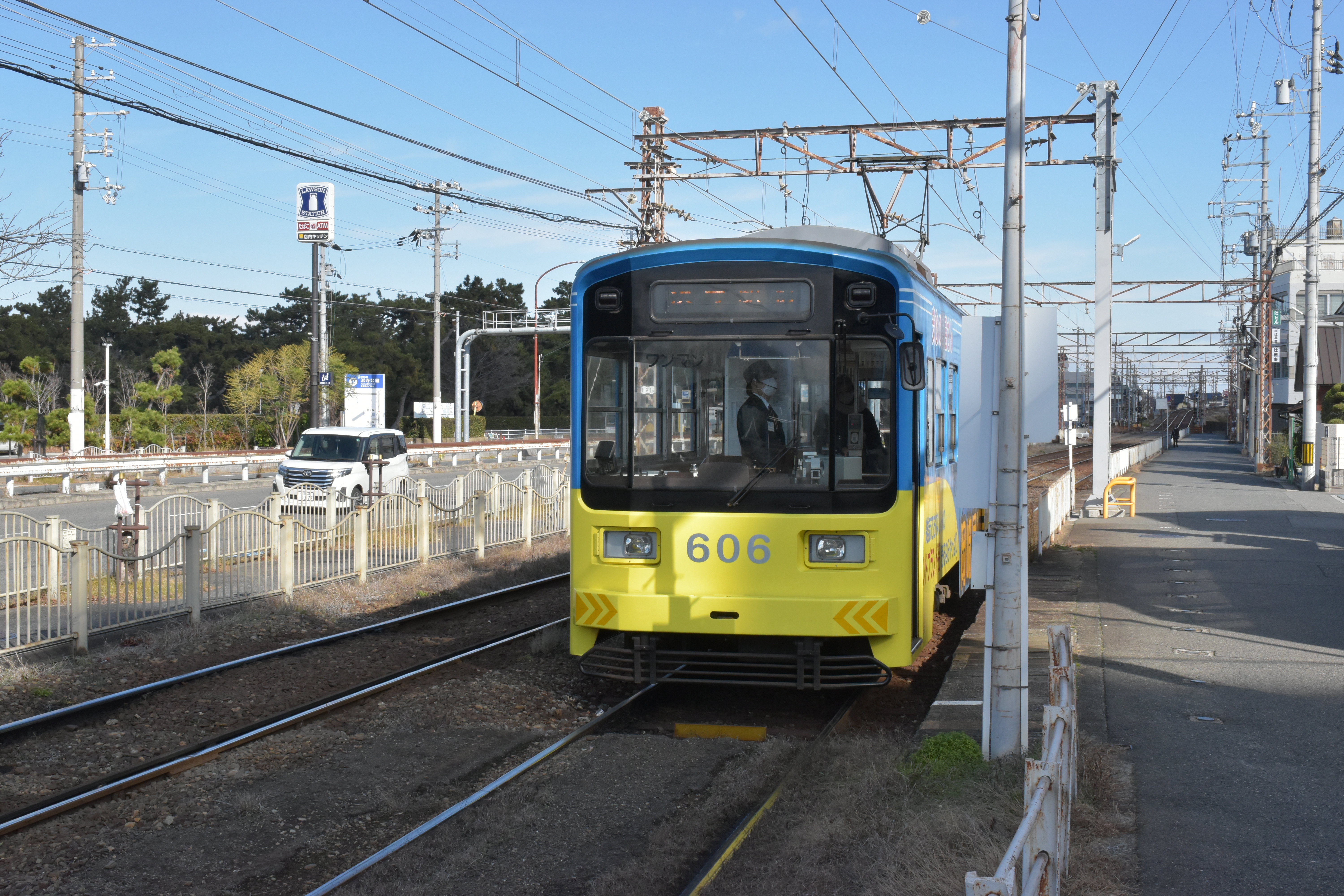
The 601 Series car the previous two photos were taken on, at Hamadera-ekimae, the southern terminus of the Uemachi Line.
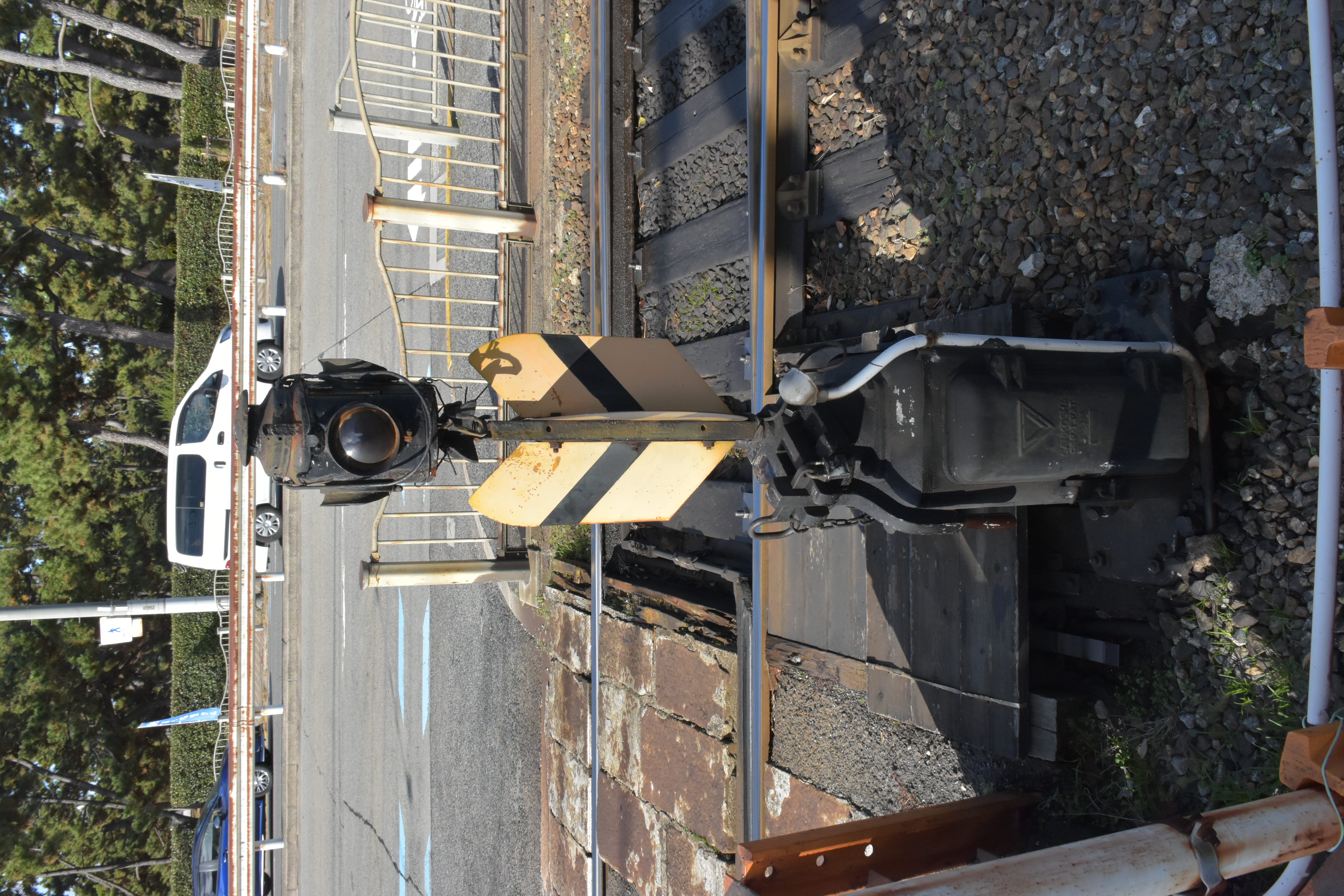
Points lever at Hamadera-ekimae
From Hamadera-ekimae, I took a walk through Hamadera Park, the station’s namesake, ending up at Takashinohama, the terminus of a short branch line on the Nankai Main Line. Hankai (the tram operator) used to be part of Nankai, and their lines roughly run in parallel, with the tram having more stops, but these days, the two companies are distinct.
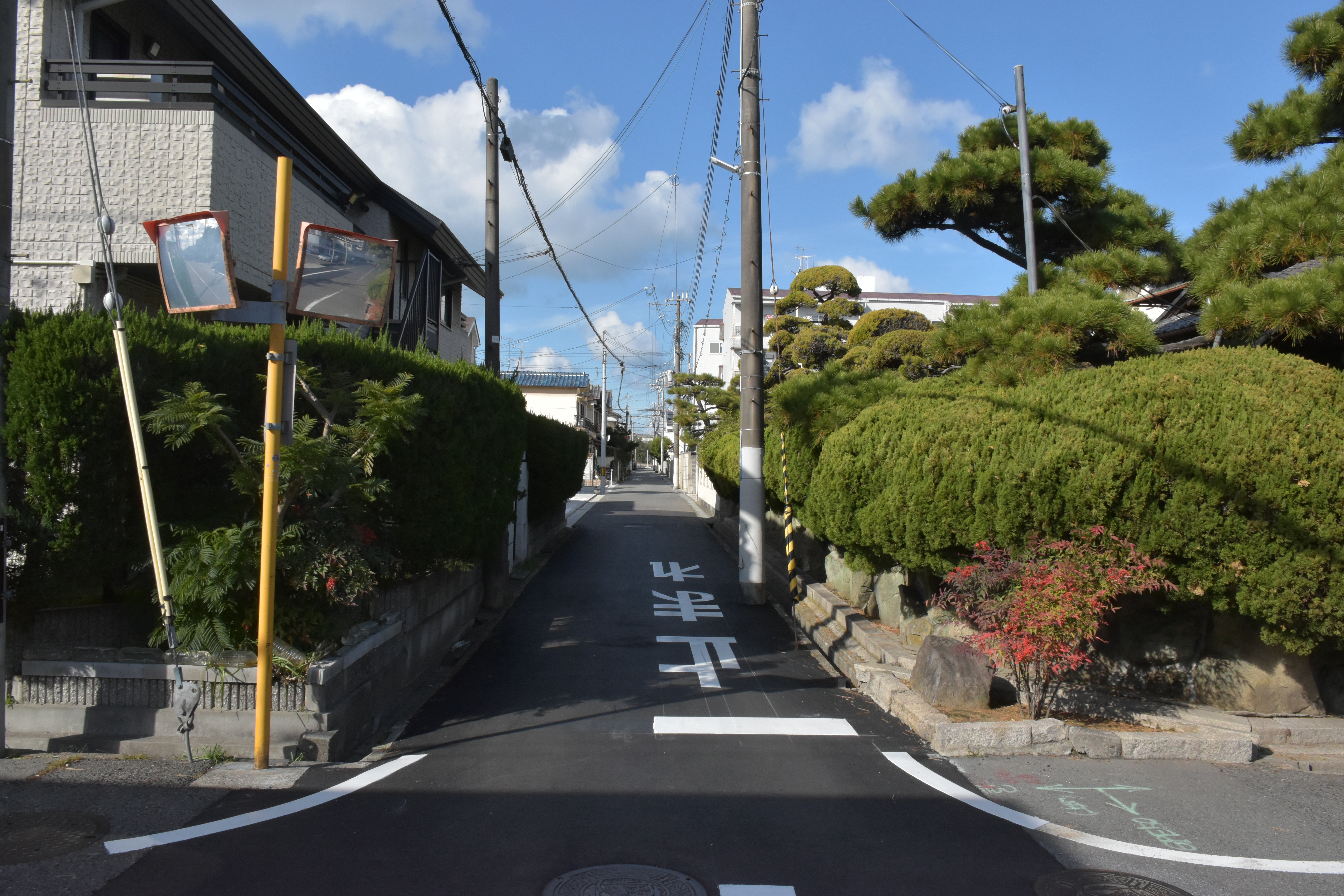
The neighborhood
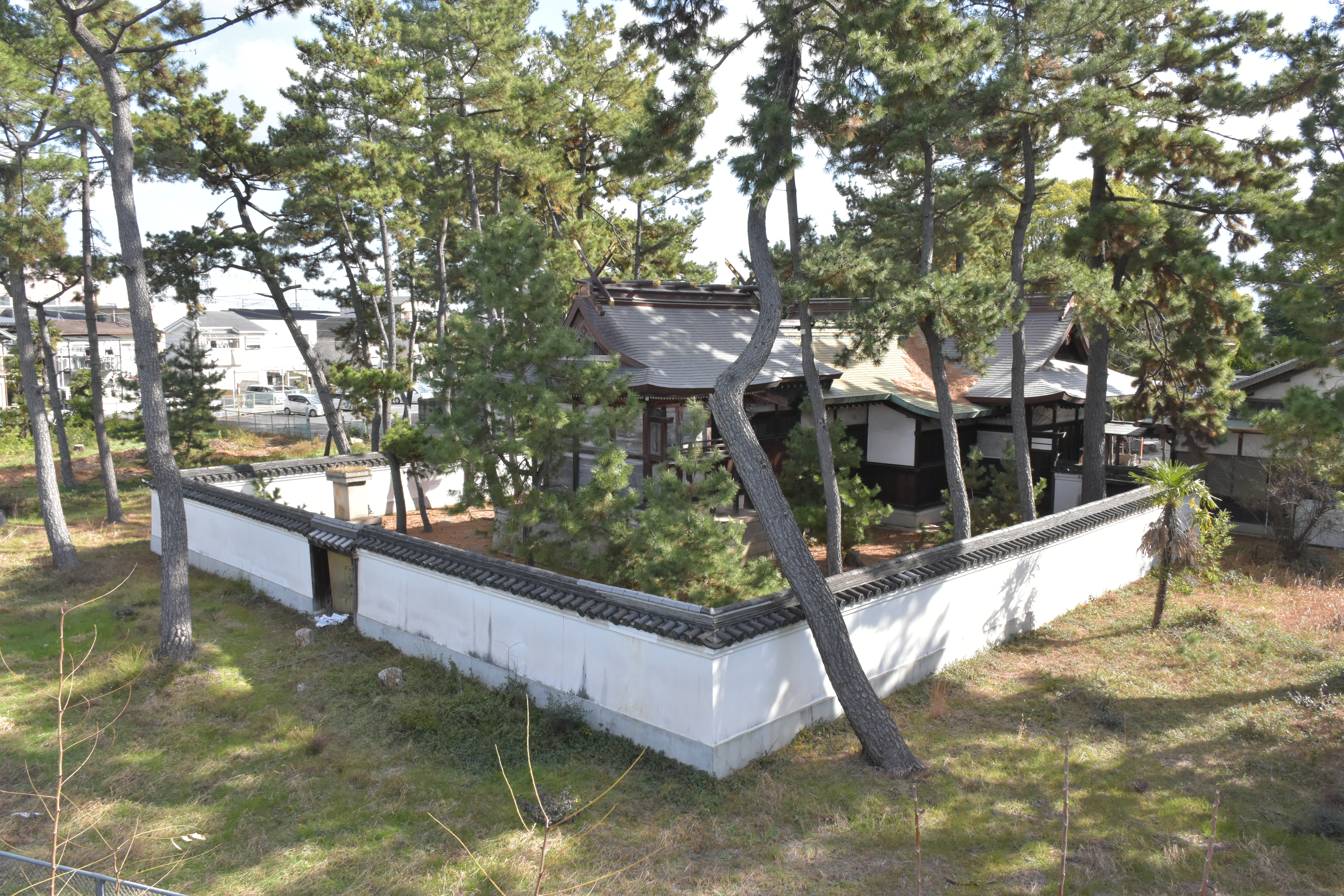
Takaishi Shrine can be seen from Takashinohama’s elevated platform
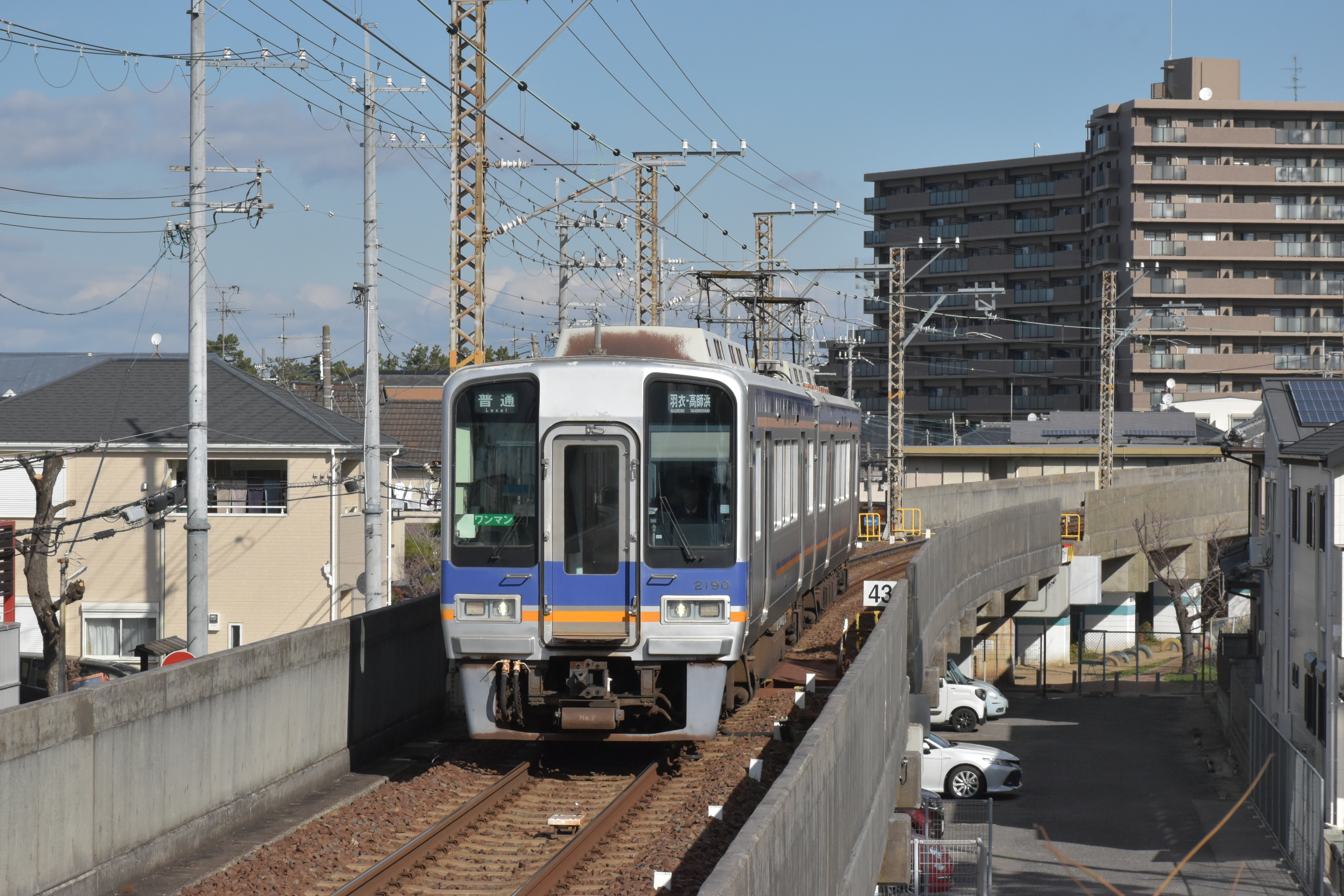
A Nankai 2000 Series EMU approaching Takashinohama. This train only goes to nearby Hagoromo station, where I changed onto a Nankai Main Line train back to Osaka-Namba.
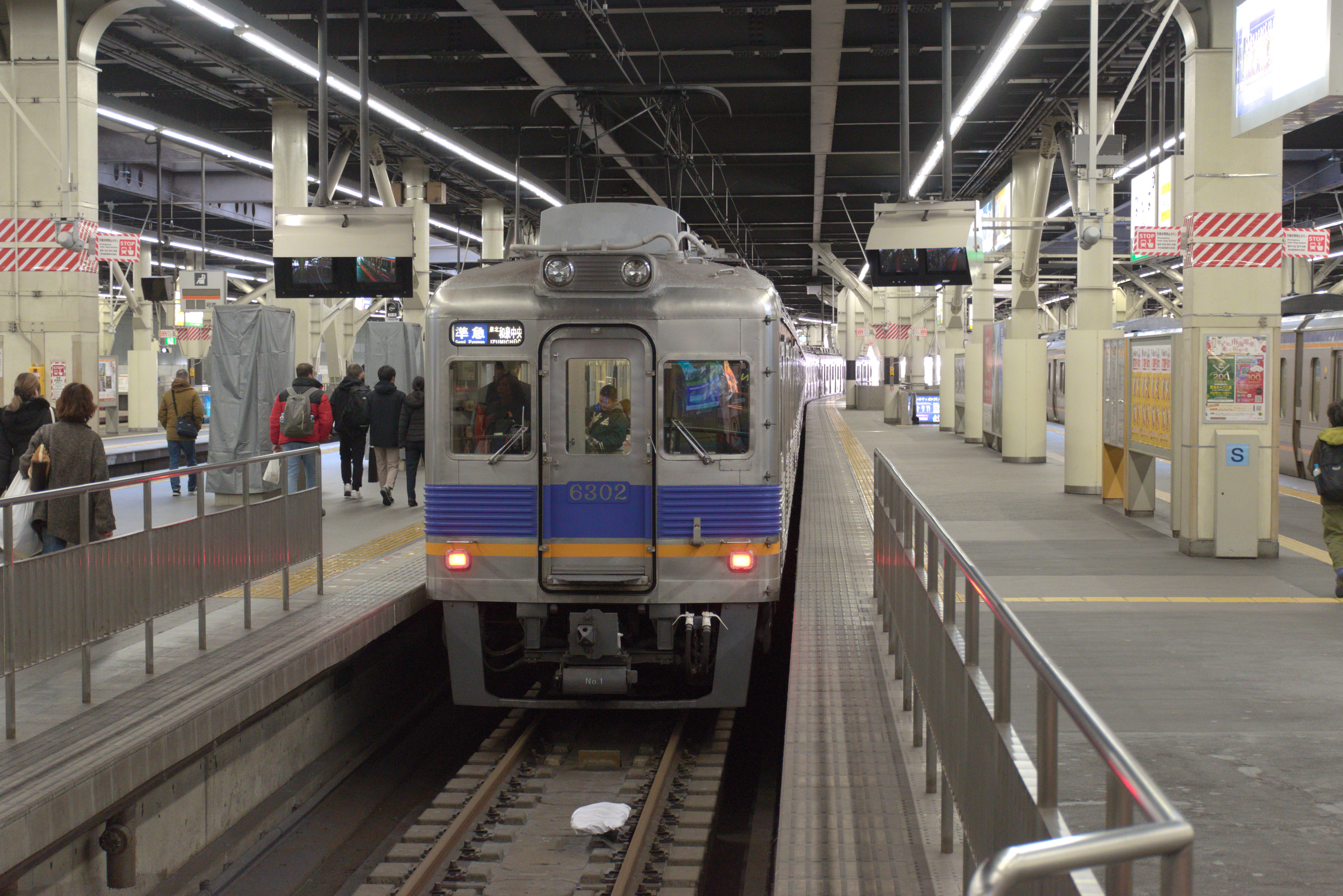
A Nankai 6000 Series EMU at Osaka-Namba
Afterwards, I played some more arcade games and returned to the hotel early to relax and plan the next day’s trip.
Sunday December 28th - Hiroshima
This was my last day in Kansai, and while there was still a lot of stuff I wanted to see and do, the most pressing thing on my list was Hiroshima.
I find it hard to write about this, because the one and only thing most people know about Hiroshima is the horrendous nuclear bombing that destroyed large parts of the cities at the end of World War II. I visited the Peace Park, and the Peace Memorial, the remnants of a former exhibition hall right below the nuclear blast. I do not think my photos can do justice to visiting the place and won’t show them here.
But Hiroshima was rebuilt and has more than a million people living in it today. My second reason to come here was to visit the Hiroshima Dentetsu streetcar system, which is the largest in the country at a route length of 35.1 km. Japan is not really a streetcar country these days, and it seems the international tram renaissance has not really taken a hold. For example, my current hometown, Munich, has 83 km of tram lines on top of 95 km worth of subway lines. Dortmund, which is far smaller than Hiroshima, has a 75 km tram network, with a significant portion of underground or elevated lines.
Hiroshima Dentetsu (a.k.a. Hiroden) operates an eclectic mix of vehicles, including a few that survived the nuclear bomb, a variety of cars bought from other Japanese streetcar operators as they closed down, and a fleet of more modern articulated units. Some of those are retrofits, some are domestic builds, and some are Siemens Combino. For a while, two used Duewag GT8 from Dortmund were also operated, but both of these are now struck from the register.
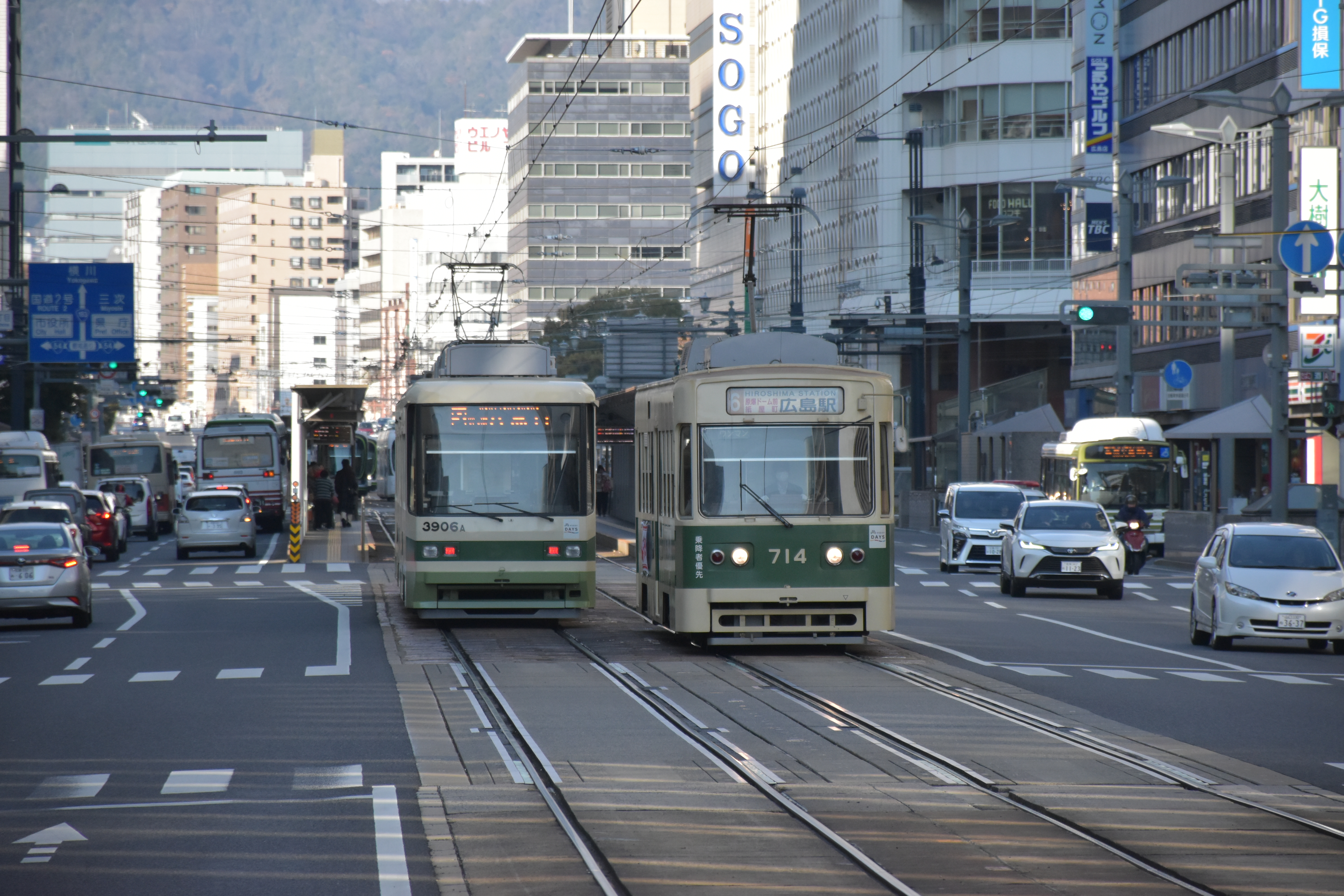
A 3900 Series “Green Liner” (66 seats) meets a 700 Series car (37 seats) near Tatemachi station
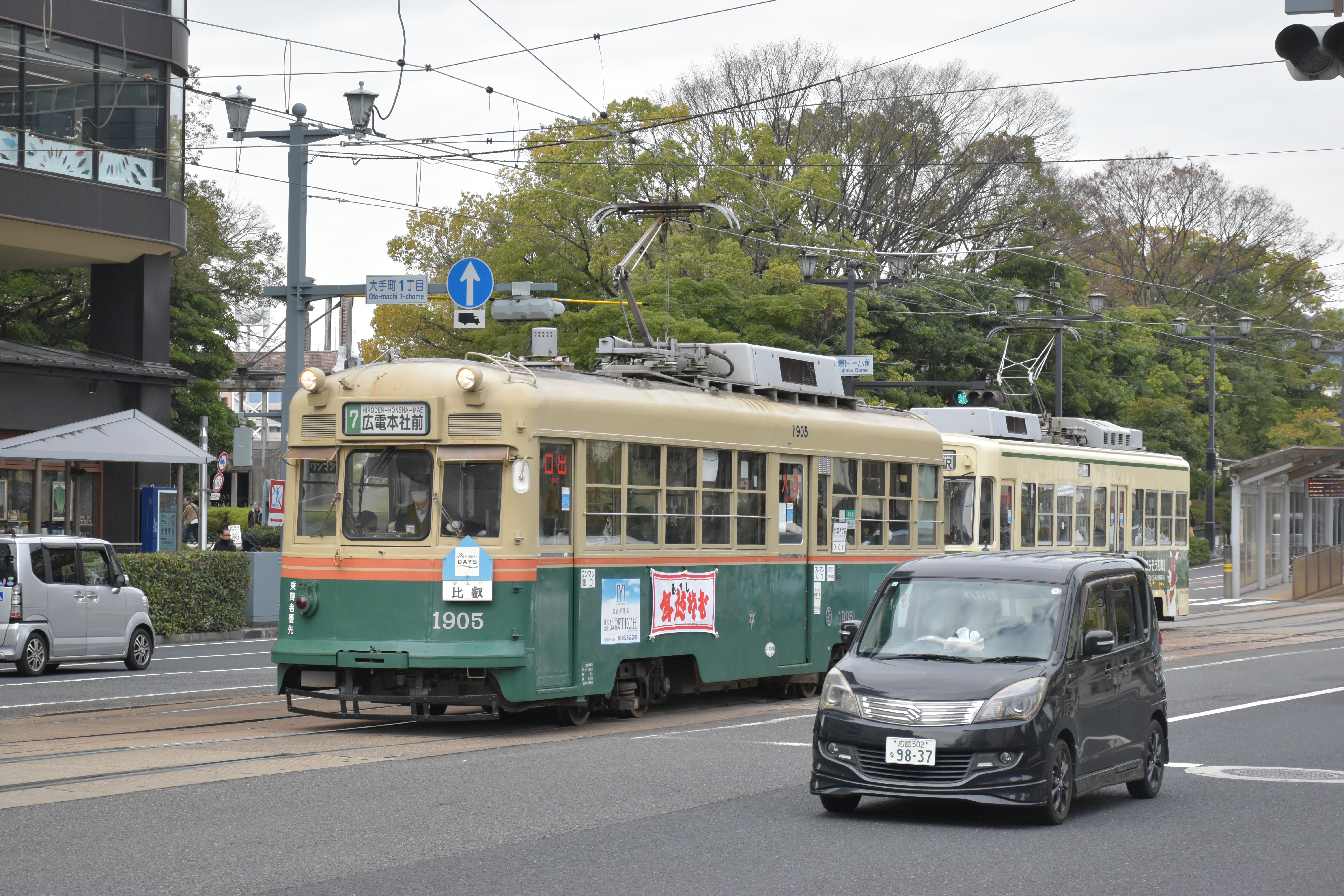
The 1900 Series was originally built for Kyoto’s streetcars, built from 1957.
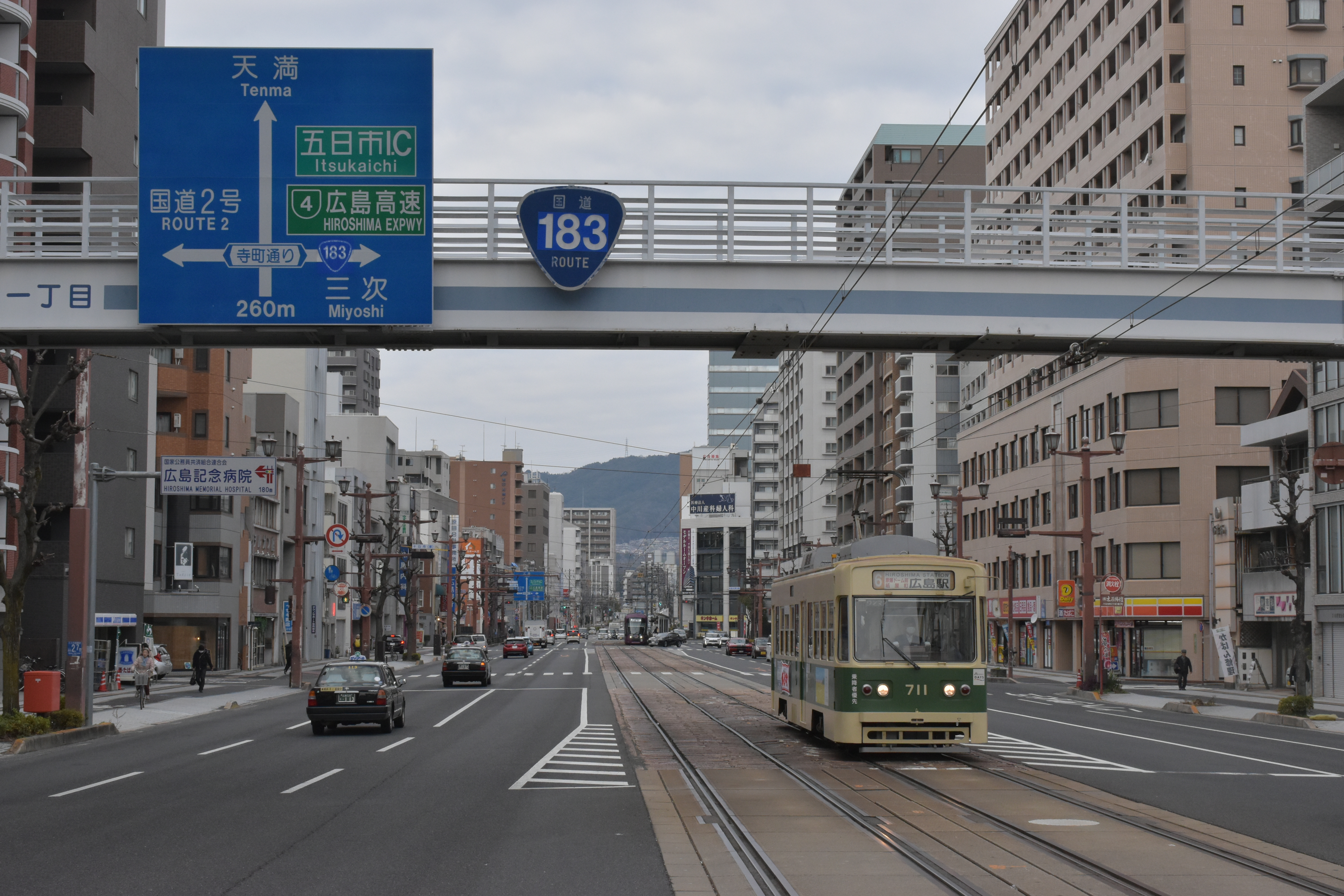
Another 700 Series car
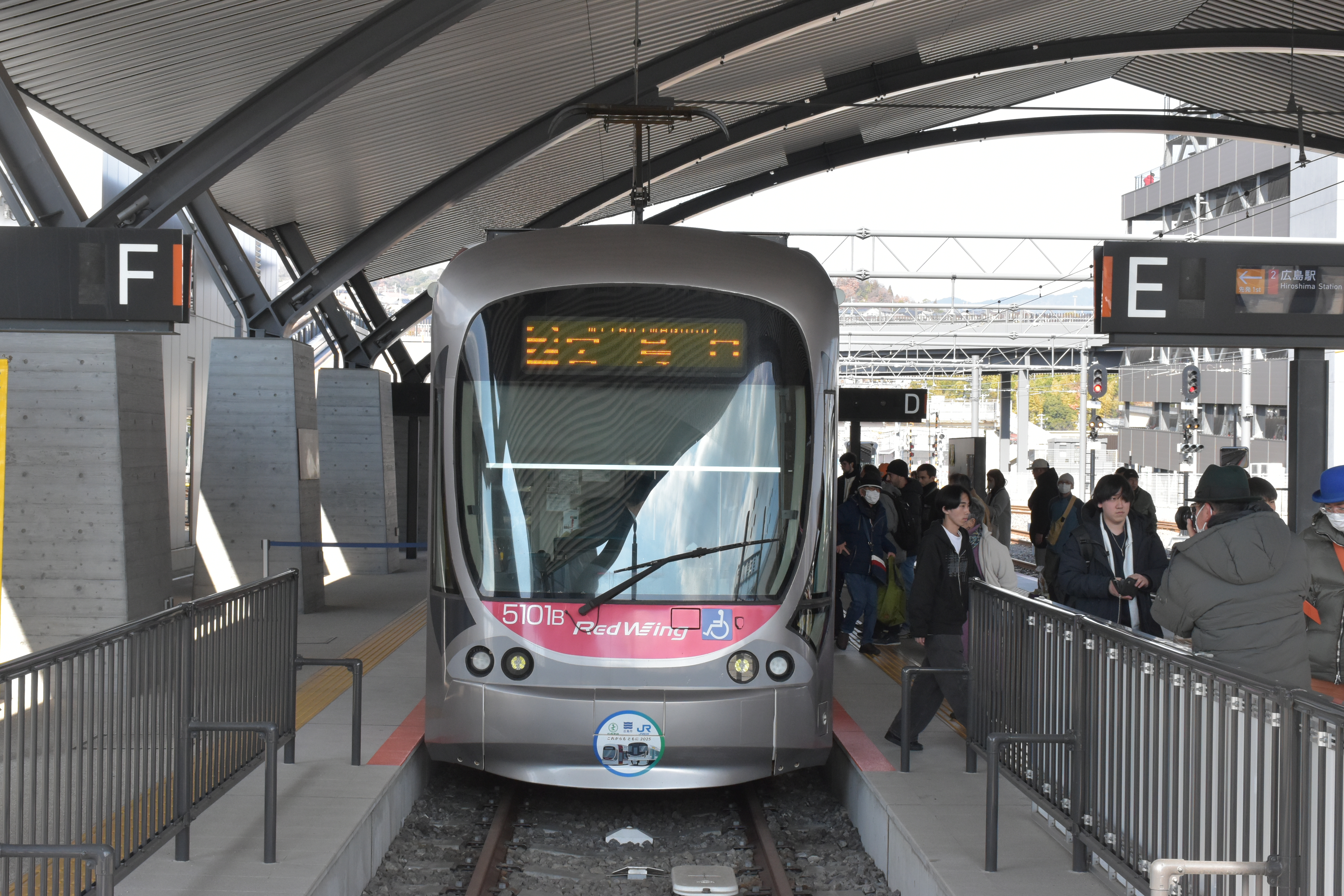
This photo was taken at Hiroden-miyajima-guchi, endpoint of the Hiroden Miyajima Line. This line is licensed and operated as a railway between Hiroden-nishi-hiroshima (in front of JR’s Nishi-Hiroshima station) and Hiroden-miyajima-guchi, but operated with regular streetcars which continue onto the streetcar network to reach Hiroshima station. This 5100 Series “Green Mover MAX” train is painted in JR West’s “Red Wing” color scheme used on local trains around Hiroshima as part of a cross-promotion.
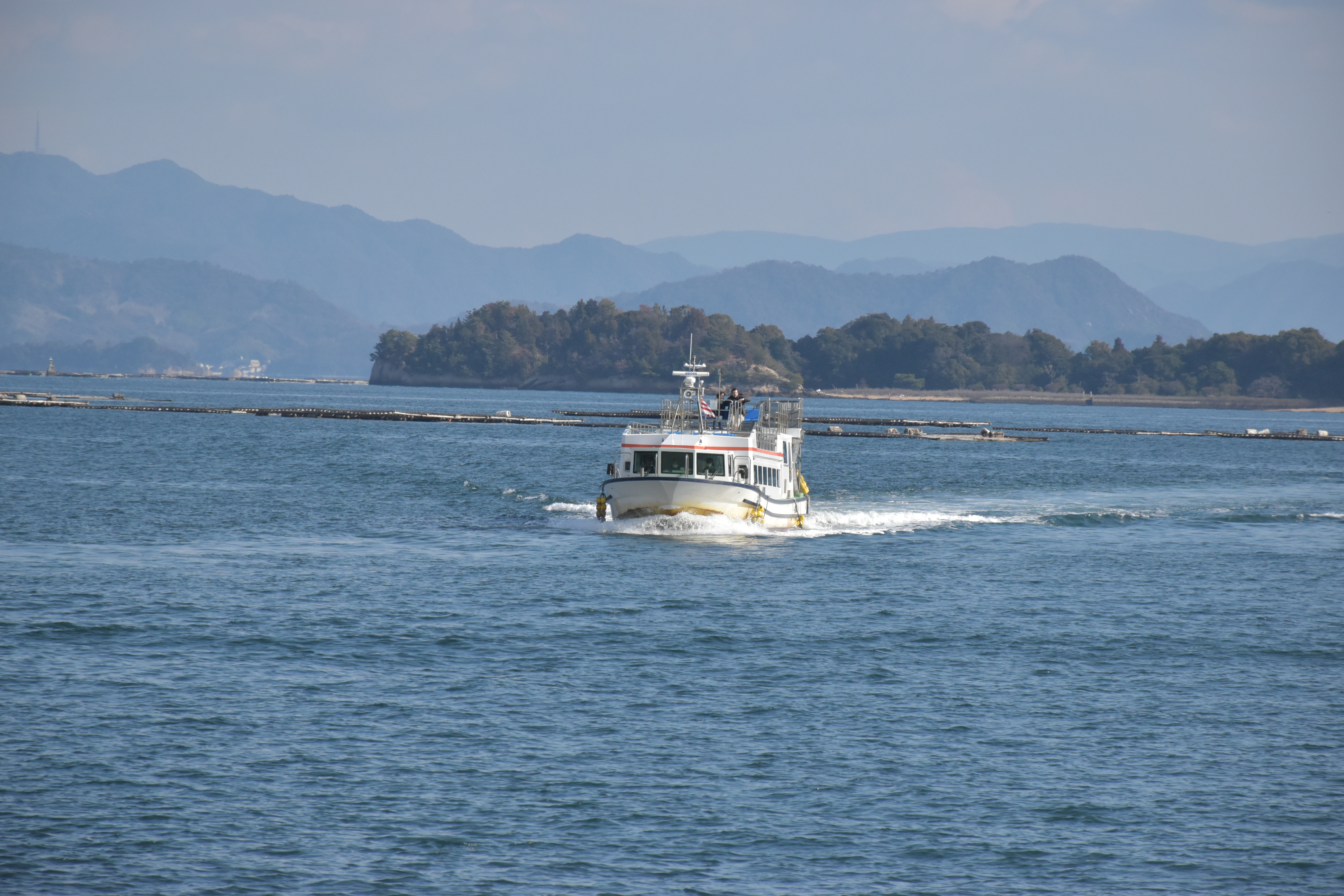
Miyajima-guchi has a small harbour for ferries connecting to the shrine island of Miyajima (“Miyajima”, 宮島, literally meaning “shrine island), a main tourist attraction of the area. But Miyajima was not in my plans for the day, as I had limited time.
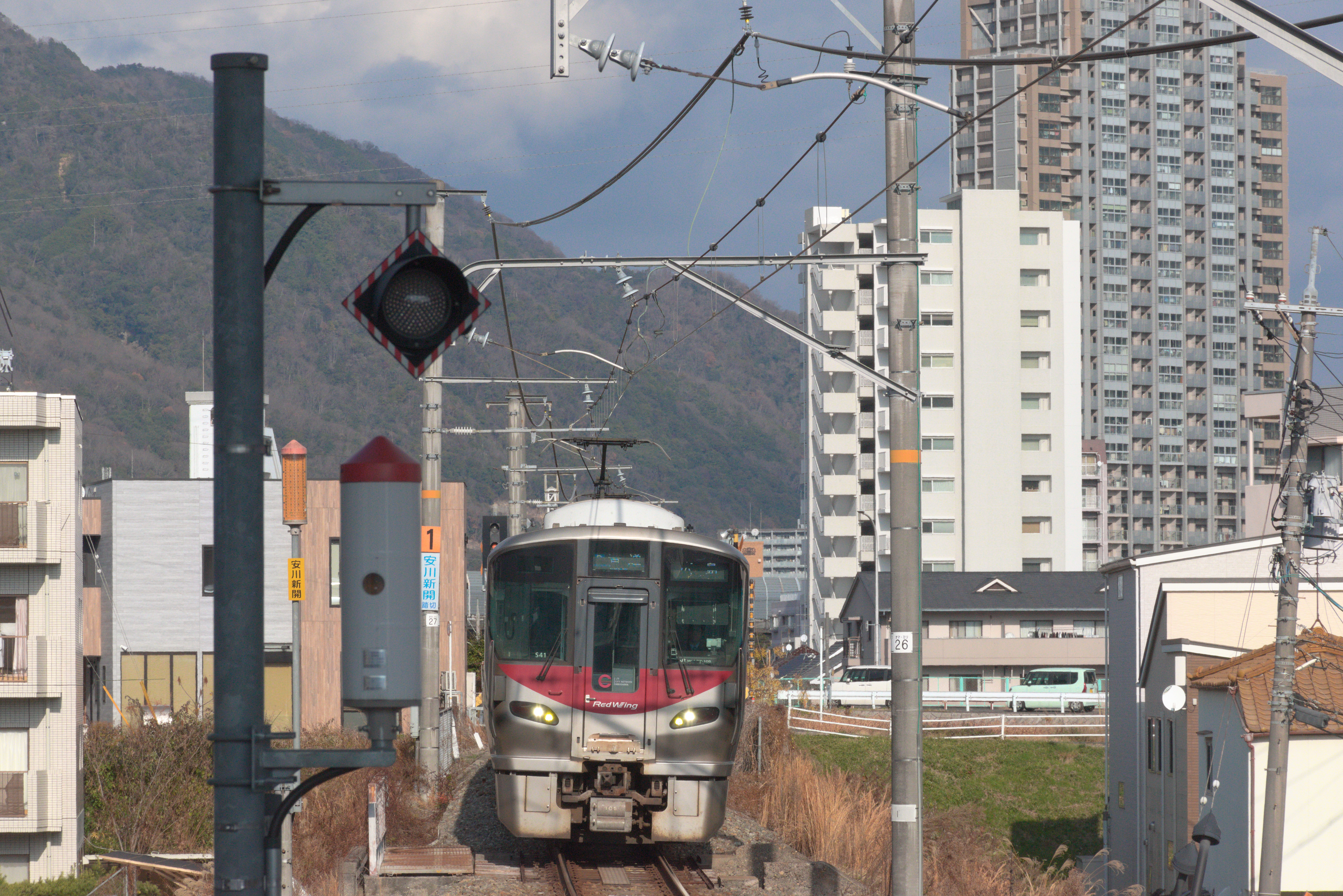
After some crisscrossing through the city and checking out the Astram, yet another people mover system which turned out to be hard to get good photos of thanks to its platform screen doors, I caught this “Red Wing” 227 Series EMU (a real one, not a Hiroden fake this time) at Omachi.
With the light fading already, I had a beef bowl for dinner, did a bit of shopping and checked out a few arcades in the city center, and then hung around at the station for a while. I had booked a reservation for a specific train the day before, because the Shinkansen was fairly packed near the turn of the years, and because I had already printed out the reservation at the seat reservation machine in the morning, changing it was no longer an option.
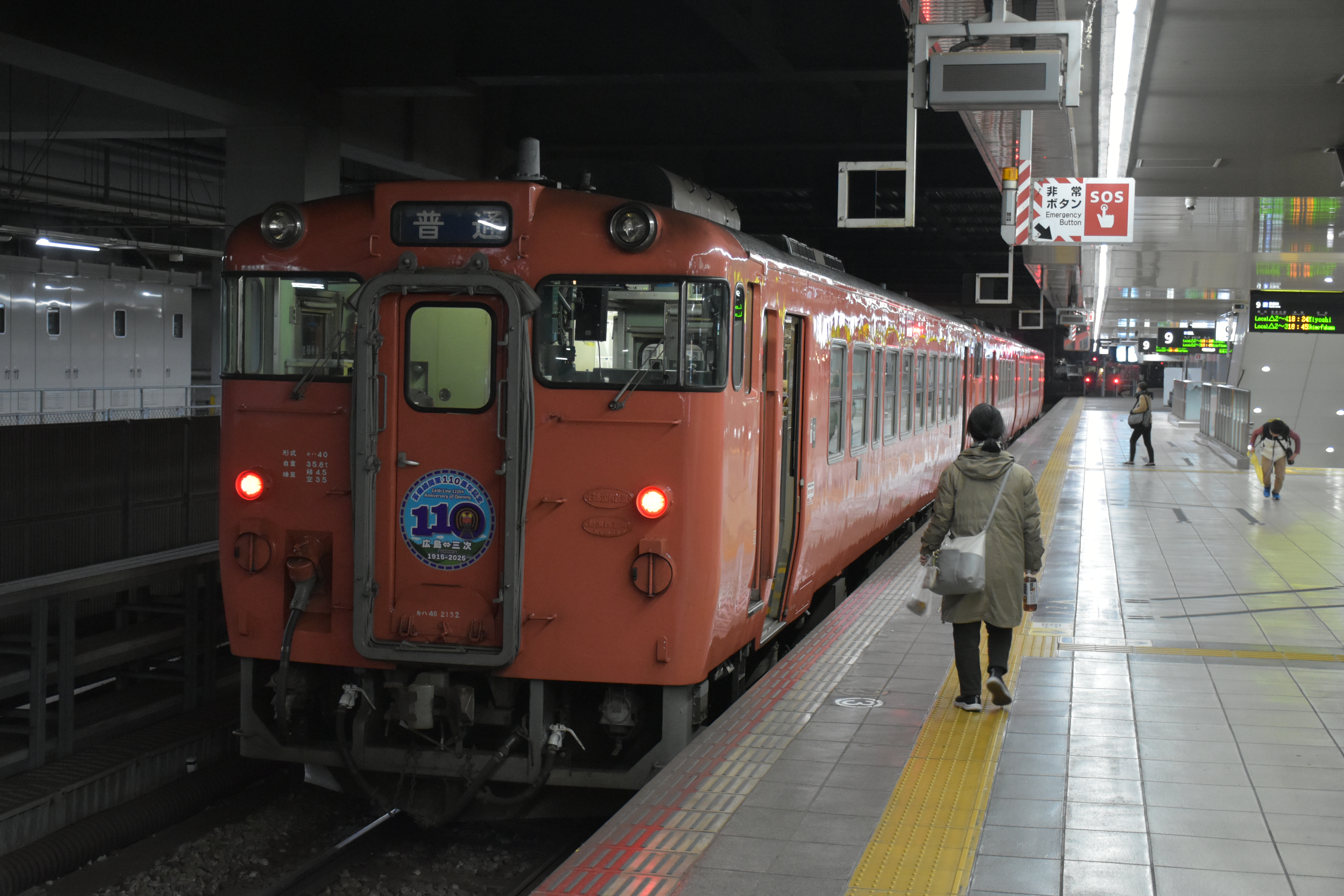
A Geibi Line train made up of a KiHa 40 railcar and KiHa 47 2-car DMU
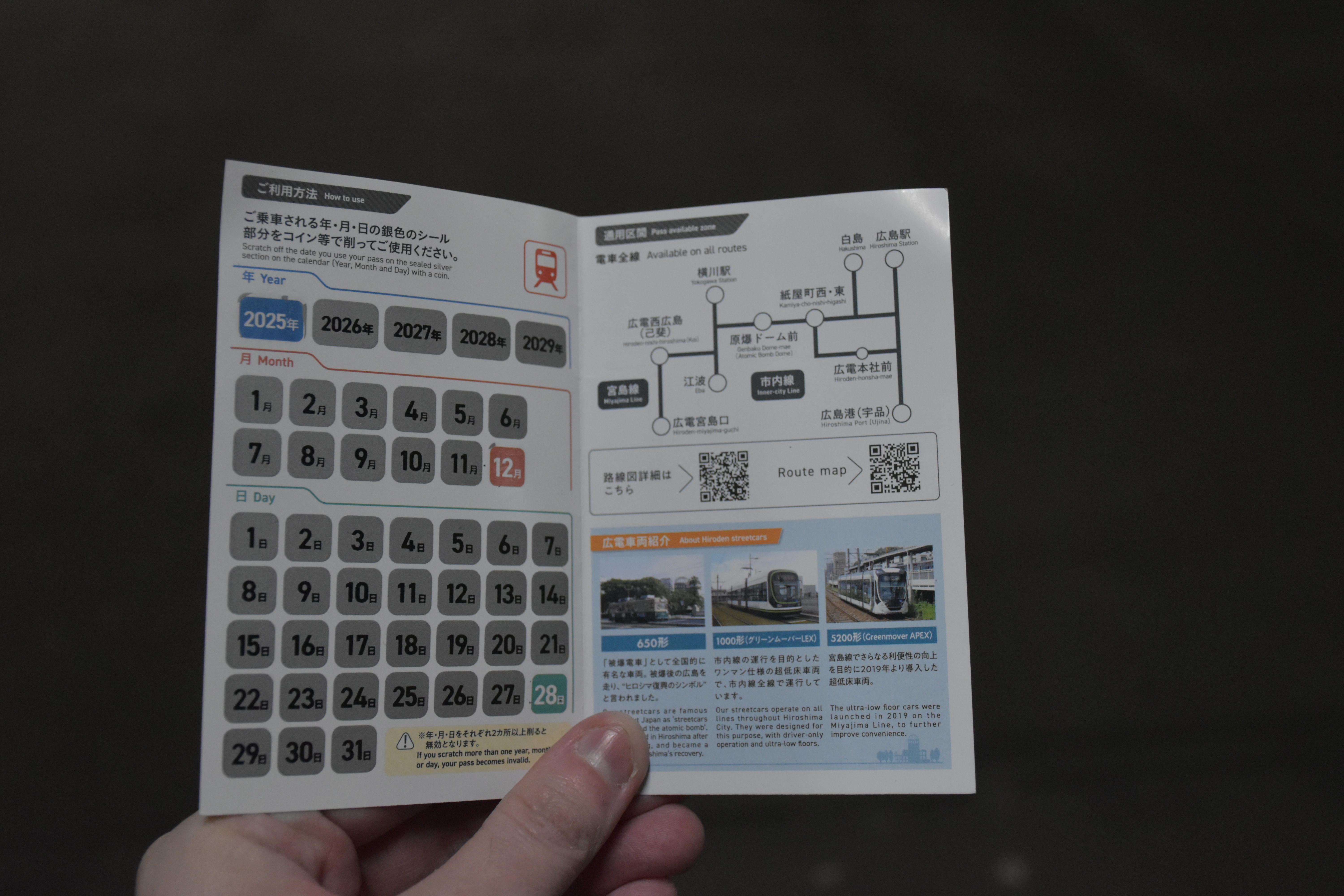
My Hiroden day pass. I had to scratch off the desired date by myself with a 1-yen coin.
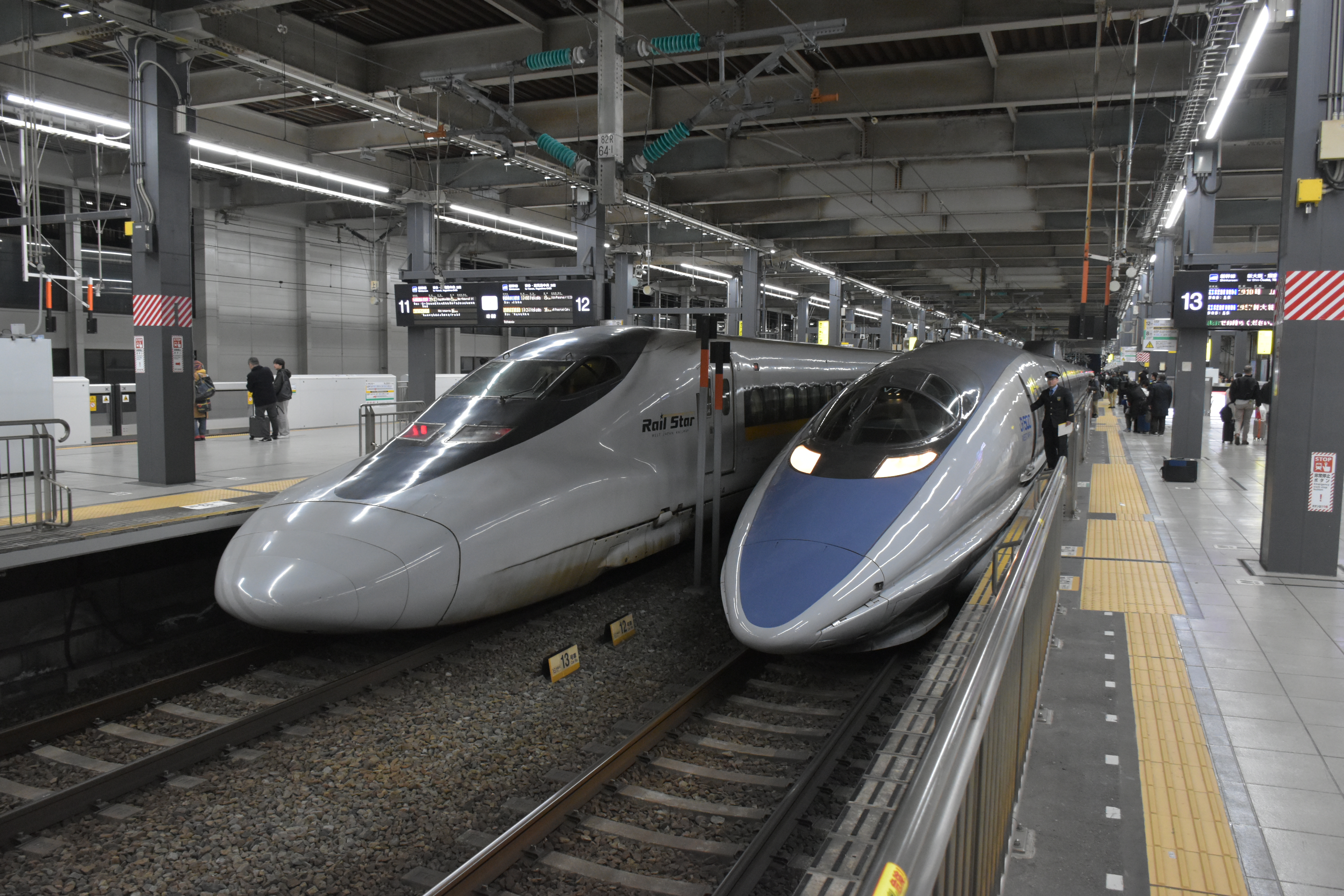
While waiting for my train on the Shinkansen platforms, I caught this 500 Series Shinkansen (right side) and a 700 Series in Hikari Rail Star livery. With Hikari Rail Star operations winding down, I suppose both of these are becoming rather rare. This was the only 500 Series I saw during my entire stay, and I really like its design, although it feels very similar to the German ICE 3, designed by the same person. I always thought of the 500 Series as derivative of the ICE 3, but it turns out the 500 Series is actually older.
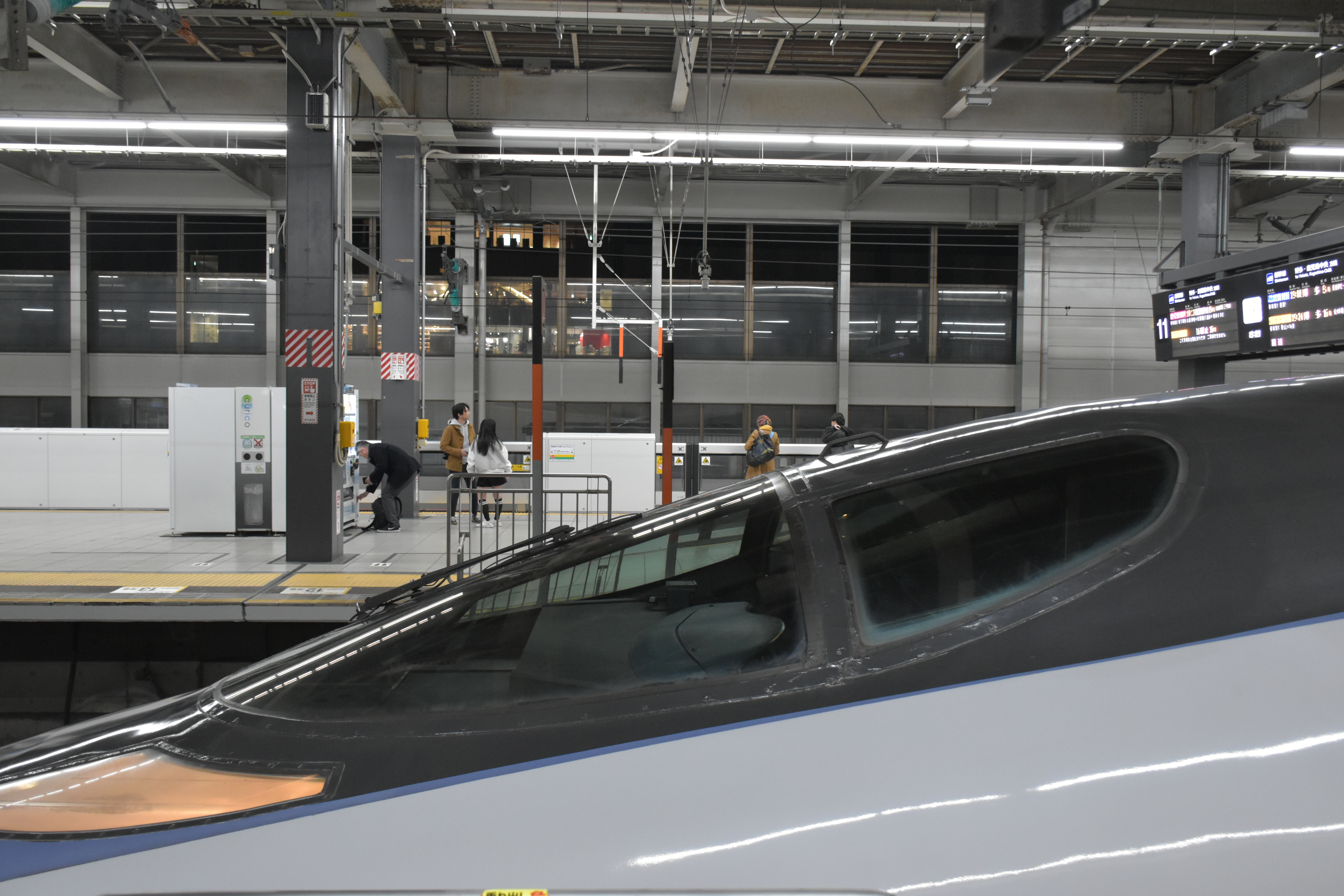
500 Series detail
Changelog
- 2026-01-22: Corrected a photo description - the Hikari Rail Star train is a 700 Series unit, not a N700 Series unit.